
Earth’s magnetic light show
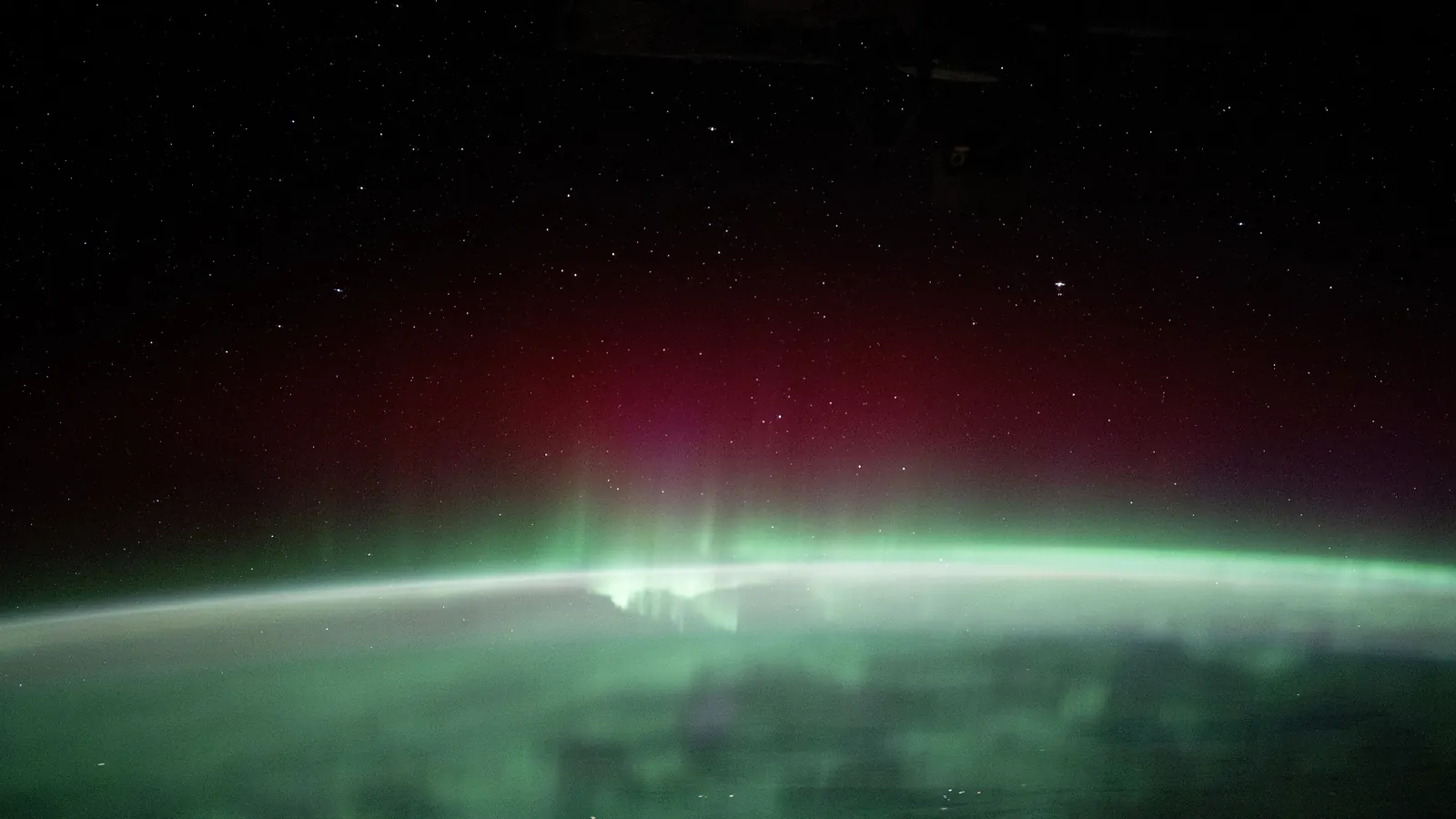
The northern lights form when energetic charged particles guided by Earth’s magnetic field collide with atoms and molecules in the upper atmosphere. Those gases release the added energy as light, producing auroral arcs, curtains and colours.
What Causes the Northern Lights? is a simple question with a layered answer. The sections below move from the central mechanism to the colours, timing, viewing conditions and misconceptions that generate the most common follow-up questions. Where a simplified classroom explanation leaves out an important qualification, the qualification is included rather than hidden.
The short answer
The Sun continuously releases a flow of charged particles called the solar wind. Earth’s magnetosphere redirects much of that flow around the planet. This distinction matters because the familiar appearance is the final result of several linked physical steps, not a single isolated event.
Energy stored in the magnetic system can accelerate particles toward polar upper atmospheres. Collisions with oxygen and nitrogen produce the light that observers call aurora. The mechanism also predicts what should change when one part of the system changes, which makes the account scientifically useful rather than merely descriptive.
For readers asking about the short answer, the practical point is that observations depend on position, timing and conditions. A photograph or brief glance captures only one configuration, whereas the scientific explanation must account for the full range of repeatable appearances. That is why authoritative explanations combine direct observation with models, calibrated instruments and predictions that can be checked independently.
The Sun supplies energy
The solar wind consists mainly of electrons and protons carried with the Sun’s magnetic field. Its speed and density vary, so the pressure on Earth’s magnetic environment changes. Researchers test the explanation by comparing measurements made under different geometries, conditions and observing methods.
Coronal mass ejections and high-speed streams can trigger geomagnetic disturbances. An aurora is therefore connected to solar activity but is not sunlight reflected from polar ice. Scale is important here: processes that happen at the level of atoms or charged particles can create patterns visible across an entire sky.
For readers asking about the sun supplies energy, the practical point is that observations depend on position, timing and conditions. A photograph or brief glance captures only one configuration, whereas the scientific explanation must account for the full range of repeatable appearances. That is why authoritative explanations combine direct observation with models, calibrated instruments and predictions that can be checked independently.
Earth’s magnetosphere
Earth’s magnetic field forms a protective region extending far into space. The solar wind compresses the dayside and stretches the nightside into a magnetotail. The mechanism also predicts what should change when one part of the system changes, which makes the account scientifically useful rather than merely descriptive.
Magnetic reconnection can rearrange field lines and release stored energy. Particles then travel along magnetic field lines toward oval regions around the poles. Careful wording prevents a common mistake—confusing what an observer sees with the underlying object or process that produced the view.
For readers asking about earth’s magnetosphere, the practical point is that observations depend on position, timing and conditions. A photograph or brief glance captures only one configuration, whereas the scientific explanation must account for the full range of repeatable appearances. That is why authoritative explanations combine direct observation with models, calibrated instruments and predictions that can be checked independently.
Why auroras gather near the poles
Magnetic field lines converge toward high northern and southern latitudes. Charged particles spiral around and move along those lines rather than travelling straight through the field. Scale is important here: processes that happen at the level of atoms or charged particles can create patterns visible across an entire sky.
The resulting precipitation maps into auroral ovals, not perfect rings fixed to geographic poles. During strong storms, the ovals expand toward lower latitudes. This distinction matters because the familiar appearance is the final result of several linked physical steps, not a single isolated event.
For readers asking about why auroras gather near the poles, the practical point is that observations depend on position, timing and conditions. A photograph or brief glance captures only one configuration, whereas the scientific explanation must account for the full range of repeatable appearances. That is why authoritative explanations combine direct observation with models, calibrated instruments and predictions that can be checked independently.
How gases turn particle energy into light
Incoming particles collide with atoms and molecules high above ordinary weather. A collision can place an atom or molecule in an excited energy state. Careful wording prevents a common mistake—confusing what an observer sees with the underlying object or process that produced the view.
When it returns to a lower state, it releases a photon with a characteristic wavelength. Many emissions together create visible sheets and rays across the sky. Researchers test the explanation by comparing measurements made under different geometries, conditions and observing methods.
For readers asking about how gases turn particle energy into light, the practical point is that observations depend on position, timing and conditions. A photograph or brief glance captures only one configuration, whereas the scientific explanation must account for the full range of repeatable appearances. That is why authoritative explanations combine direct observation with models, calibrated instruments and predictions that can be checked independently.
Why green is most common
Atomic oxygen can emit the familiar green auroral line near 557.7 nanometres. The relevant altitude contains enough oxygen and enough collisions to produce strong emission. This distinction matters because the familiar appearance is the final result of several linked physical steps, not a single isolated event.
Human night vision is also relatively responsive in the green region. Cameras may show richer green than an observer perceives because sensors collect light over time. The mechanism also predicts what should change when one part of the system changes, which makes the account scientifically useful rather than merely descriptive.
For readers asking about why green is most common, the practical point is that observations depend on position, timing and conditions. A photograph or brief glance captures only one configuration, whereas the scientific explanation must account for the full range of repeatable appearances. That is why authoritative explanations combine direct observation with models, calibrated instruments and predictions that can be checked independently.
Where red, blue and purple come from
Atomic oxygen at higher altitudes can produce red emission. Molecular nitrogen and ionized nitrogen contribute blue, violet and pink features. Researchers test the explanation by comparing measurements made under different geometries, conditions and observing methods.
Colour depends on gas, altitude, particle energy and collision frequency. Blended emissions and camera processing can create colours that do not fit a single simple label. Scale is important here: processes that happen at the level of atoms or charged particles can create patterns visible across an entire sky.
For readers asking about where red, blue and purple come from, the practical point is that observations depend on position, timing and conditions. A photograph or brief glance captures only one configuration, whereas the scientific explanation must account for the full range of repeatable appearances. That is why authoritative explanations combine direct observation with models, calibrated instruments and predictions that can be checked independently.
Auroral arcs, curtains and rays
Auroral forms trace structures in the magnetic field and upper atmosphere. Parallel rays appear to converge because of perspective, much like railway tracks. The mechanism also predicts what should change when one part of the system changes, which makes the account scientifically useful rather than merely descriptive.
Rapid brightening can occur during a magnetospheric substorm. Movement is real, but time-lapse video can make gradual changes look much faster. Careful wording prevents a common mistake—confusing what an observer sees with the underlying object or process that produced the view.
For readers asking about auroral arcs, curtains and rays, the practical point is that observations depend on position, timing and conditions. A photograph or brief glance captures only one configuration, whereas the scientific explanation must account for the full range of repeatable appearances. That is why authoritative explanations combine direct observation with models, calibrated instruments and predictions that can be checked independently.
Northern and southern lights
Aurora borealis is the northern display and aurora australis is the southern display. Both arise from the same Sun-magnetosphere-atmosphere system. Scale is important here: processes that happen at the level of atoms or charged particles can create patterns visible across an entire sky.
They can occur at broadly corresponding times, though local magnetic conditions may make patterns unequal. Antarctica’s geography means fewer people routinely observe the southern counterpart. This distinction matters because the familiar appearance is the final result of several linked physical steps, not a single isolated event.
For readers asking about northern and southern lights, the practical point is that observations depend on position, timing and conditions. A photograph or brief glance captures only one configuration, whereas the scientific explanation must account for the full range of repeatable appearances. That is why authoritative explanations combine direct observation with models, calibrated instruments and predictions that can be checked independently.
When and where auroras are visible
Darkness, clear skies and a location near or within the auroral oval improve the chance of seeing a display. Auroras occur in daylight too but scattered sunlight hides them from unaided eyes. Careful wording prevents a common mistake—confusing what an observer sees with the underlying object or process that produced the view.
Geomagnetic activity can make aurora visible unusually far from the poles. Cloud forecasts and light pollution matter alongside space-weather forecasts. Researchers test the explanation by comparing measurements made under different geometries, conditions and observing methods.
For readers asking about when and where auroras are visible, the practical point is that observations depend on position, timing and conditions. A photograph or brief glance captures only one configuration, whereas the scientific explanation must account for the full range of repeatable appearances. That is why authoritative explanations combine direct observation with models, calibrated instruments and predictions that can be checked independently.
How aurora forecasts work
Forecasters monitor the solar wind with spacecraft located upstream from Earth. Magnetic orientation is important because some configurations couple more effectively to Earth’s field. This distinction matters because the familiar appearance is the final result of several linked physical steps, not a single isolated event.
Models estimate the position and intensity of the auroral oval. Forecasts express probability, not a promise that a specific observer will see a bright display. The mechanism also predicts what should change when one part of the system changes, which makes the account scientifically useful rather than merely descriptive.
For readers asking about how aurora forecasts work, the practical point is that observations depend on position, timing and conditions. A photograph or brief glance captures only one configuration, whereas the scientific explanation must account for the full range of repeatable appearances. That is why authoritative explanations combine direct observation with models, calibrated instruments and predictions that can be checked independently.
What cameras see differently
Long exposures gather more photons than the eye collects in a brief glance. High sensor sensitivity can reveal colour in a display that looks greyish to a person. Researchers test the explanation by comparing measurements made under different geometries, conditions and observing methods.
White balance, saturation and computational processing affect the final photograph. A photograph can be scientifically useful while still differing from naked-eye appearance. Scale is important here: processes that happen at the level of atoms or charged particles can create patterns visible across an entire sky.
For readers asking about what cameras see differently, the practical point is that observations depend on position, timing and conditions. A photograph or brief glance captures only one configuration, whereas the scientific explanation must account for the full range of repeatable appearances. That is why authoritative explanations combine direct observation with models, calibrated instruments and predictions that can be checked independently.
Aurora and technology
The same geomagnetic storms that intensify auroras can affect radio communication, navigation and satellites. Changing magnetic fields can induce currents in long conductors and power systems. The mechanism also predicts what should change when one part of the system changes, which makes the account scientifically useful rather than merely descriptive.
An aurora itself is not the hazard; it is a visible sign of a larger space-weather event. Monitoring combines ground magnetometers, satellites and solar observations. Careful wording prevents a common mistake—confusing what an observer sees with the underlying object or process that produced the view.
For readers asking about aurora and technology, the practical point is that observations depend on position, timing and conditions. A photograph or brief glance captures only one configuration, whereas the scientific explanation must account for the full range of repeatable appearances. That is why authoritative explanations combine direct observation with models, calibrated instruments and predictions that can be checked independently.
Common misconceptions
Auroras are not caused by cold air or polar snow. They occur far above the clouds and ordinary weather. Scale is important here: processes that happen at the level of atoms or charged particles can create patterns visible across an entire sky.
They do not make reliable audible sounds in the usual physical explanation, though rare reports are studied. A bright display does not mean charged solar particles are reaching people at ground level. This distinction matters because the familiar appearance is the final result of several linked physical steps, not a single isolated event.
For readers asking about common misconceptions, the practical point is that observations depend on position, timing and conditions. A photograph or brief glance captures only one configuration, whereas the scientific explanation must account for the full range of repeatable appearances. That is why authoritative explanations combine direct observation with models, calibrated instruments and predictions that can be checked independently.
What scientists still investigate
Researchers study how energy crosses the magnetosphere and accelerates particles. Small-scale structures require coordinated measurements from spacecraft and the ground. Careful wording prevents a common mistake—confusing what an observer sees with the underlying object or process that produced the view.
Auroras on other planets reveal different magnetic fields and atmospheres. Each display is both a spectacle and a diagnostic screen for near-Earth space. Researchers test the explanation by comparing measurements made under different geometries, conditions and observing methods.
For readers asking about what scientists still investigate, the practical point is that observations depend on position, timing and conditions. A photograph or brief glance captures only one configuration, whereas the scientific explanation must account for the full range of repeatable appearances. That is why authoritative explanations combine direct observation with models, calibrated instruments and predictions that can be checked independently.
Frequently asked questions
What is the simplest correct explanation?
The northern lights form when energetic charged particles guided by Earth’s magnetic field collide with atoms and molecules in the upper atmosphere. Those gases release the added energy as light, producing auroral arcs, curtains and colours.
Can the appearance change without the underlying physics changing?
Yes. Viewing angle, distance, atmospheric conditions, brightness, local surroundings and the sensitivity of human vision or cameras can change what is perceived even when the governing physical process remains the same.
Why do photographs sometimes look different from direct observation?
Cameras collect and process light differently from the human visual system. Exposure time, sensor response, white balance, contrast and computational processing can reveal faint structure or amplify colour, so an image should be interpreted with its capture method in mind.
How do scientists know the explanation is reliable?
The explanation connects independently measured quantities and makes predictions across changing conditions. Spectroscopy, imaging, timing, field measurements, laboratory physics and observations from different locations provide checks with different strengths and limitations.
What should a reader remember?
Keep the geometry and the energy pathway in view. Ask where the light or sound began, what it interacted with, how it travelled and why the observer received that particular signal at that particular time.
Key takeaways
- The northern lights form when energetic charged particles guided by Earth’s magnetic field collide with atoms and molecules in the upper atmosphere. Those gases release the added energy as light, producing auroral arcs, curtains and colours.
- The observed appearance is evidence of a physical process, but it is also shaped by viewing geometry and detection.
- Authoritative measurements support the central mechanism while leaving room to refine details.
- Related phenomena may share part of the physics without being the same event.
Continue exploring
What researchers will test next
Progress now depends on measurements that connect controlled experiments with the complexity of the wider world. Researchers need observations collected across different locations, instruments and timescales, with methods described clearly enough for independent teams to repeat them. Larger samples can reveal whether an apparent pattern is widespread or driven by a few unusual cases. Longer records can separate temporary variation from a durable change.
New instruments may improve precision, but precision alone does not guarantee a better explanation. Scientists must still test alternative causes, disclose uncertainty and check whether an analysis gives the same answer when reasonable assumptions change. Open data and carefully documented methods allow other researchers to find errors, reproduce results and combine evidence that was gathered for different purposes.
The most useful future studies will make competing explanations face distinct predictions. When several independent tests agree, confidence can grow. When they disagree, the mismatch becomes evidence about what the original account was missing. Barnakle treats this process as a strength of science: conclusions can be reliable without being final, and responsible reporting should explain both what is known and what observation could change the picture.
Sources and further reading
Keep exploring.
One remarkable idea at a time—nature, science, history and beyond.
Sources and further reading
Barnakle uses credible primary and authoritative sources wherever possible.
- NASA — Auroras
- https://science.nasa.gov/sun/auroras/
- NOAA Space Weather Prediction Center — Aurora
- https://www.swpc.noaa.gov/phenomena/aurora
- NASA — Guide to Finding and Photographing Auroras
- https://science.nasa.gov/feature/nasas-guide-to-finding-and-photographing-auroras/
- NASA JPL — How Auroras Form
- https://www.jpl.nasa.gov/nmp/st5/SCIENCE/aurora.html
Last reviewed September 24, 2026.

Barnakle Editorial Team
A member of the Barnakle editorial team, exploring remarkable ideas with clarity, curiosity and care.
More from this author →