
A changing view of a sunlit world
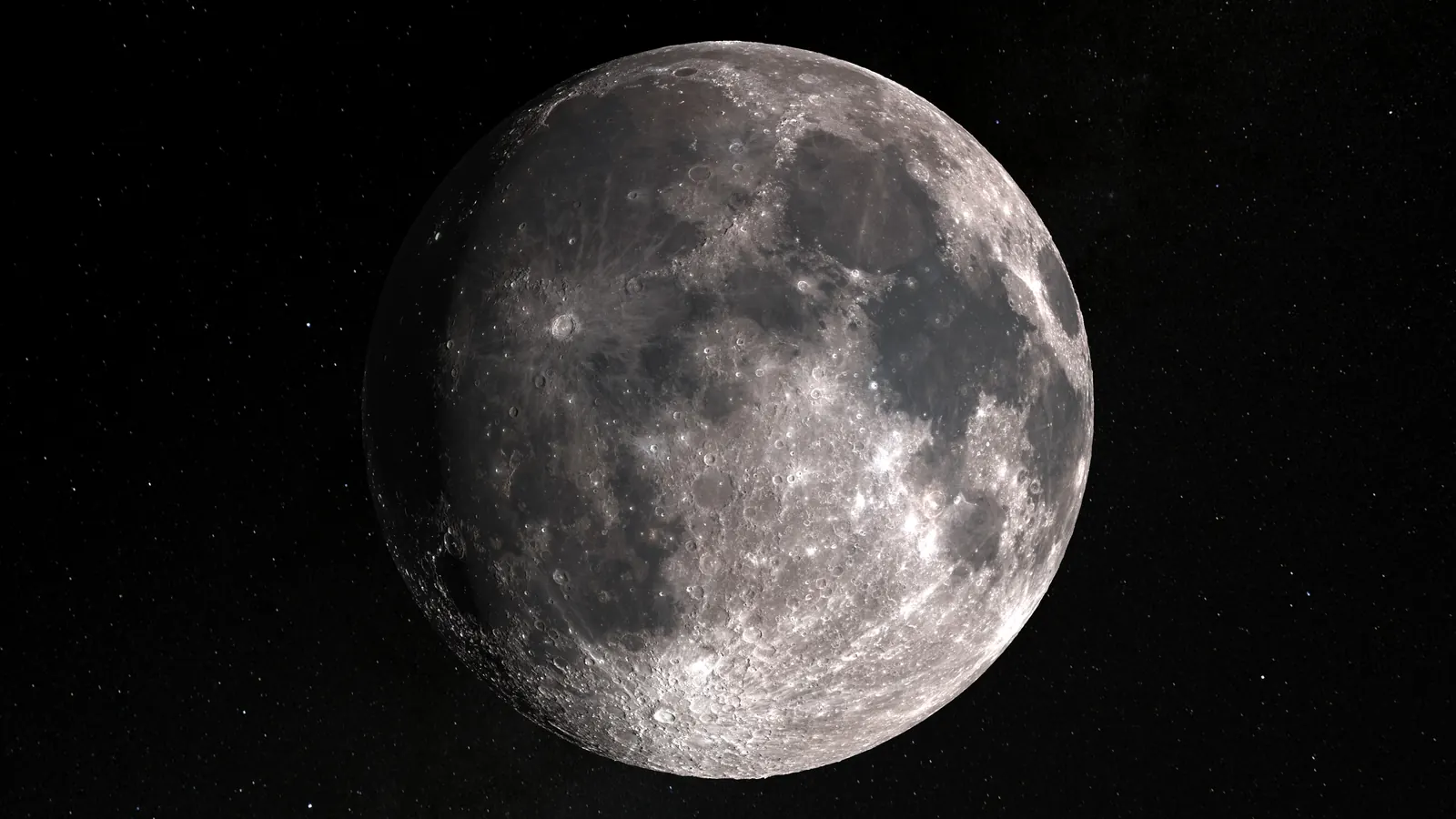
The Moon does not physically change shape. Half of it is illuminated by the Sun at almost all times, and its phases occur because our viewing angle changes as the Moon orbits Earth. Eclipses are different: they require an unusually close alignment of the Sun, Earth and Moon.
Why Does the Moon Change Shape? is a simple question with a layered answer. The sections below move from the central mechanism to the colours, timing, viewing conditions and misconceptions that generate the most common follow-up questions. Where a simplified classroom explanation leaves out an important qualification, the qualification is included rather than hidden.
The short answer
Sunlight always illuminates the hemisphere of the Moon facing the Sun. As the Moon orbits Earth, observers see changing fractions of that illuminated hemisphere. This distinction matters because the familiar appearance is the final result of several linked physical steps, not a single isolated event.
The repeating sequence is called the lunar phase cycle. Earth’s shadow causes a lunar eclipse, not the ordinary phases. The mechanism also predicts what should change when one part of the system changes, which makes the account scientifically useful rather than merely descriptive.
For readers asking about the short answer, the practical point is that observations depend on position, timing and conditions. A photograph or brief glance captures only one configuration, whereas the scientific explanation must account for the full range of repeatable appearances. That is why authoritative explanations combine direct observation with models, calibrated instruments and predictions that can be checked independently.
The Moon is a sphere
The Moon is a roughly spherical world rather than a flat disk. At any moment, one hemisphere faces the Sun and one faces away, apart from small twilight effects. Researchers test the explanation by comparing measurements made under different geometries, conditions and observing methods.
The boundary between lunar day and night is called the terminator. Changing geometry makes that boundary appear to move across the face visible from Earth. Scale is important here: processes that happen at the level of atoms or charged particles can create patterns visible across an entire sky.
For readers asking about the moon is a sphere, the practical point is that observations depend on position, timing and conditions. A photograph or brief glance captures only one configuration, whereas the scientific explanation must account for the full range of repeatable appearances. That is why authoritative explanations combine direct observation with models, calibrated instruments and predictions that can be checked independently.
New moon
At new moon, the Moon lies roughly in the same skyward direction as the Sun. Its sunlit hemisphere mostly faces away from Earth. The mechanism also predicts what should change when one part of the system changes, which makes the account scientifically useful rather than merely descriptive.
The Moon is difficult to see because its near side is dark and it appears close to the bright Sun. New moon does not create a solar eclipse every month because the orbit is tilted. Careful wording prevents a common mistake—confusing what an observer sees with the underlying object or process that produced the view.
For readers asking about new moon, the practical point is that observations depend on position, timing and conditions. A photograph or brief glance captures only one configuration, whereas the scientific explanation must account for the full range of repeatable appearances. That is why authoritative explanations combine direct observation with models, calibrated instruments and predictions that can be checked independently.
Waxing crescent
After new moon, a thin illuminated crescent becomes visible. Waxing means the visible lit fraction is increasing. Scale is important here: processes that happen at the level of atoms or charged particles can create patterns visible across an entire sky.
Earthshine can faintly illuminate the rest of the disk when sunlight reflects from Earth to the Moon and back. The crescent’s orientation depends on latitude, season and the angle of the Moon’s path. This distinction matters because the familiar appearance is the final result of several linked physical steps, not a single isolated event.
For readers asking about waxing crescent, the practical point is that observations depend on position, timing and conditions. A photograph or brief glance captures only one configuration, whereas the scientific explanation must account for the full range of repeatable appearances. That is why authoritative explanations combine direct observation with models, calibrated instruments and predictions that can be checked independently.
First quarter
At first quarter, the Moon has completed about one quarter of its orbit since new moon. Observers see roughly half of the near-side disk illuminated. Careful wording prevents a common mistake—confusing what an observer sees with the underlying object or process that produced the view.
The name describes orbital progress, not the fraction of the disk that looks bright. First-quarter Moon is commonly visible in the afternoon and evening. Researchers test the explanation by comparing measurements made under different geometries, conditions and observing methods.
For readers asking about first quarter, the practical point is that observations depend on position, timing and conditions. A photograph or brief glance captures only one configuration, whereas the scientific explanation must account for the full range of repeatable appearances. That is why authoritative explanations combine direct observation with models, calibrated instruments and predictions that can be checked independently.
Waxing gibbous and full moon
Gibbous means more than half but less than all of the visible disk is illuminated. The bright fraction continues increasing until full moon. This distinction matters because the familiar appearance is the final result of several linked physical steps, not a single isolated event.
At full moon, Earth lies roughly between the Sun and Moon, so the near side is illuminated. Full moon rises near sunset because it appears opposite the Sun in the sky. The mechanism also predicts what should change when one part of the system changes, which makes the account scientifically useful rather than merely descriptive.
For readers asking about waxing gibbous and full moon, the practical point is that observations depend on position, timing and conditions. A photograph or brief glance captures only one configuration, whereas the scientific explanation must account for the full range of repeatable appearances. That is why authoritative explanations combine direct observation with models, calibrated instruments and predictions that can be checked independently.
Waning phases
After full moon, the illuminated fraction visible from Earth decreases. The sequence passes through waning gibbous, third or last quarter, and waning crescent. Researchers test the explanation by comparing measurements made under different geometries, conditions and observing methods.
Waning moons are increasingly prominent after midnight and before dawn. The cycle then returns to new moon. Scale is important here: processes that happen at the level of atoms or charged particles can create patterns visible across an entire sky.
For readers asking about waning phases, the practical point is that observations depend on position, timing and conditions. A photograph or brief glance captures only one configuration, whereas the scientific explanation must account for the full range of repeatable appearances. That is why authoritative explanations combine direct observation with models, calibrated instruments and predictions that can be checked independently.
Why the cycle lasts about a month
The Moon takes about 27.3 days to orbit Earth relative to distant stars. Earth moves around the Sun during that same interval. The mechanism also predicts what should change when one part of the system changes, which makes the account scientifically useful rather than merely descriptive.
The Moon therefore needs roughly 29.5 days to return to the same Sun-Earth viewing geometry. That longer interval is the synodic month and governs the phase cycle. Careful wording prevents a common mistake—confusing what an observer sees with the underlying object or process that produced the view.
For readers asking about why the cycle lasts about a month, the practical point is that observations depend on position, timing and conditions. A photograph or brief glance captures only one configuration, whereas the scientific explanation must account for the full range of repeatable appearances. That is why authoritative explanations combine direct observation with models, calibrated instruments and predictions that can be checked independently.
Why phases are not Earth’s shadow
During most phases, Earth’s shadow points nowhere near the Moon. The curved dividing line is the Moon’s own day-night boundary viewed at an angle. Scale is important here: processes that happen at the level of atoms or charged particles can create patterns visible across an entire sky.
If Earth’s shadow caused phases, a lunar eclipse would occur through most of every month. Simple observations of phase timing and position confirm the illumination explanation. This distinction matters because the familiar appearance is the final result of several linked physical steps, not a single isolated event.
For readers asking about why phases are not earth’s shadow, the practical point is that observations depend on position, timing and conditions. A photograph or brief glance captures only one configuration, whereas the scientific explanation must account for the full range of repeatable appearances. That is why authoritative explanations combine direct observation with models, calibrated instruments and predictions that can be checked independently.
How lunar eclipses differ
A lunar eclipse occurs when the full Moon passes through Earth’s shadow. The orbit’s tilt means most full moons pass above or below that shadow. Careful wording prevents a common mistake—confusing what an observer sees with the underlying object or process that produced the view.
A partial alignment darkens only part of the Moon, while a total eclipse places the disk within the umbra. Earth’s atmosphere can bend reddened sunlight into the shadow, colouring a totally eclipsed Moon. Researchers test the explanation by comparing measurements made under different geometries, conditions and observing methods.
For readers asking about how lunar eclipses differ, the practical point is that observations depend on position, timing and conditions. A photograph or brief glance captures only one configuration, whereas the scientific explanation must account for the full range of repeatable appearances. That is why authoritative explanations combine direct observation with models, calibrated instruments and predictions that can be checked independently.
How solar eclipses differ
A solar eclipse occurs near new moon when the Moon passes between Earth and the Sun. The Moon’s shadow reaches only a limited region of Earth during totality. This distinction matters because the familiar appearance is the final result of several linked physical steps, not a single isolated event.
Most new moons miss the required alignment because of the orbital tilt. Safe certified solar viewing methods are essential outside the brief total phase of a total solar eclipse. The mechanism also predicts what should change when one part of the system changes, which makes the account scientifically useful rather than merely descriptive.
For readers asking about how solar eclipses differ, the practical point is that observations depend on position, timing and conditions. A photograph or brief glance captures only one configuration, whereas the scientific explanation must account for the full range of repeatable appearances. That is why authoritative explanations combine direct observation with models, calibrated instruments and predictions that can be checked independently.
Why we usually see the same lunar face
The Moon rotates once during each orbit around Earth. This synchronous rotation keeps nearly the same hemisphere directed toward us. Researchers test the explanation by comparing measurements made under different geometries, conditions and observing methods.
It does not mean the Moon fails to rotate. Libration lets observers see slightly more than half of the lunar surface over time. Scale is important here: processes that happen at the level of atoms or charged particles can create patterns visible across an entire sky.
For readers asking about why we usually see the same lunar face, the practical point is that observations depend on position, timing and conditions. A photograph or brief glance captures only one configuration, whereas the scientific explanation must account for the full range of repeatable appearances. That is why authoritative explanations combine direct observation with models, calibrated instruments and predictions that can be checked independently.
Why the Moon can appear in daytime
Moon visibility depends on its position relative to the Sun, not on a rule that it belongs only to night. Many phases place it above the horizon during daylight. The mechanism also predicts what should change when one part of the system changes, which makes the account scientifically useful rather than merely descriptive.
The bright sky reduces contrast but does not erase the Moon. New moon is usually hidden by geometry and glare, while full moon is mostly opposite the daytime Sun. Careful wording prevents a common mistake—confusing what an observer sees with the underlying object or process that produced the view.
For readers asking about why the moon can appear in daytime, the practical point is that observations depend on position, timing and conditions. A photograph or brief glance captures only one configuration, whereas the scientific explanation must account for the full range of repeatable appearances. That is why authoritative explanations combine direct observation with models, calibrated instruments and predictions that can be checked independently.
Why the Moon can look unusually large
The horizon Moon illusion changes perceived size without greatly changing the Moon’s angular diameter. Foreground objects and visual context probably contribute to the effect. Scale is important here: processes that happen at the level of atoms or charged particles can create patterns visible across an entire sky.
The Moon’s elliptical orbit also changes its actual apparent size modestly. The illusion and orbital distance are separate phenomena. This distinction matters because the familiar appearance is the final result of several linked physical steps, not a single isolated event.
For readers asking about why the moon can look unusually large, the practical point is that observations depend on position, timing and conditions. A photograph or brief glance captures only one configuration, whereas the scientific explanation must account for the full range of repeatable appearances. That is why authoritative explanations combine direct observation with models, calibrated instruments and predictions that can be checked independently.
A practical observing guide
Tracking the Moon at the same time on consecutive days reveals its eastward orbital motion. The terminator is useful for observing craters because low-angle sunlight creates shadows. Careful wording prevents a common mistake—confusing what an observer sees with the underlying object or process that produced the view.
A phase calendar predicts geometry, while local rise and set times determine visibility. Binocular users should follow ordinary eye safety and never search close to the Sun. Researchers test the explanation by comparing measurements made under different geometries, conditions and observing methods.
For readers asking about a practical observing guide, the practical point is that observations depend on position, timing and conditions. A photograph or brief glance captures only one configuration, whereas the scientific explanation must account for the full range of repeatable appearances. That is why authoritative explanations combine direct observation with models, calibrated instruments and predictions that can be checked independently.
Frequently asked questions
What is the simplest correct explanation?
The Moon does not physically change shape. Half of it is illuminated by the Sun at almost all times, and its phases occur because our viewing angle changes as the Moon orbits Earth. Eclipses are different: they require an unusually close alignment of the Sun, Earth and Moon.
Can the appearance change without the underlying physics changing?
Yes. Viewing angle, distance, atmospheric conditions, brightness, local surroundings and the sensitivity of human vision or cameras can change what is perceived even when the governing physical process remains the same.
Why do photographs sometimes look different from direct observation?
Cameras collect and process light differently from the human visual system. Exposure time, sensor response, white balance, contrast and computational processing can reveal faint structure or amplify colour, so an image should be interpreted with its capture method in mind.
How do scientists know the explanation is reliable?
The explanation connects independently measured quantities and makes predictions across changing conditions. Spectroscopy, imaging, timing, field measurements, laboratory physics and observations from different locations provide checks with different strengths and limitations.
What should a reader remember?
Keep the geometry and the energy pathway in view. Ask where the light or sound began, what it interacted with, how it travelled and why the observer received that particular signal at that particular time.
Key takeaways
- The Moon does not physically change shape. Half of it is illuminated by the Sun at almost all times, and its phases occur because our viewing angle changes as the Moon orbits Earth. Eclipses are different: they require an unusually close alignment of the Sun, Earth and Moon.
- The observed appearance is evidence of a physical process, but it is also shaped by viewing geometry and detection.
- Authoritative measurements support the central mechanism while leaving room to refine details.
- Related phenomena may share part of the physics without being the same event.
Continue exploring
What researchers will test next
Progress now depends on measurements that connect controlled experiments with the complexity of the wider world. Researchers need observations collected across different locations, instruments and timescales, with methods described clearly enough for independent teams to repeat them. Larger samples can reveal whether an apparent pattern is widespread or driven by a few unusual cases. Longer records can separate temporary variation from a durable change.
New instruments may improve precision, but precision alone does not guarantee a better explanation. Scientists must still test alternative causes, disclose uncertainty and check whether an analysis gives the same answer when reasonable assumptions change. Open data and carefully documented methods allow other researchers to find errors, reproduce results and combine evidence that was gathered for different purposes.
The most useful future studies will make competing explanations face distinct predictions. When several independent tests agree, confidence can grow. When they disagree, the mismatch becomes evidence about what the original account was missing. Barnakle treats this process as a strength of science: conclusions can be reliable without being final, and responsible reporting should explain both what is known and what observation could change the picture.
Sources and further reading
Keep exploring.
One remarkable idea at a time—nature, science, history and beyond.
Sources and further reading
Barnakle uses credible primary and authoritative sources wherever possible.
- NASA — Moon Phases
- https://science.nasa.gov/moon/moon-phases/
- NASA Space Place — What Are the Moon’s Phases?
- https://spaceplace.nasa.gov/moon-phases/
- NASA — Eclipses and the Moon
- https://science.nasa.gov/moon/eclipses/
- NASA — Top Moon Questions
- https://science.nasa.gov/moon/top-moon-questions/
Last reviewed September 24, 2026.

Barnakle Editorial Team
A member of the Barnakle editorial team, exploring remarkable ideas with clarity, curiosity and care.
More from this author →