A steady star, an unsteady atmosphere
What changes between the star and your eyes?
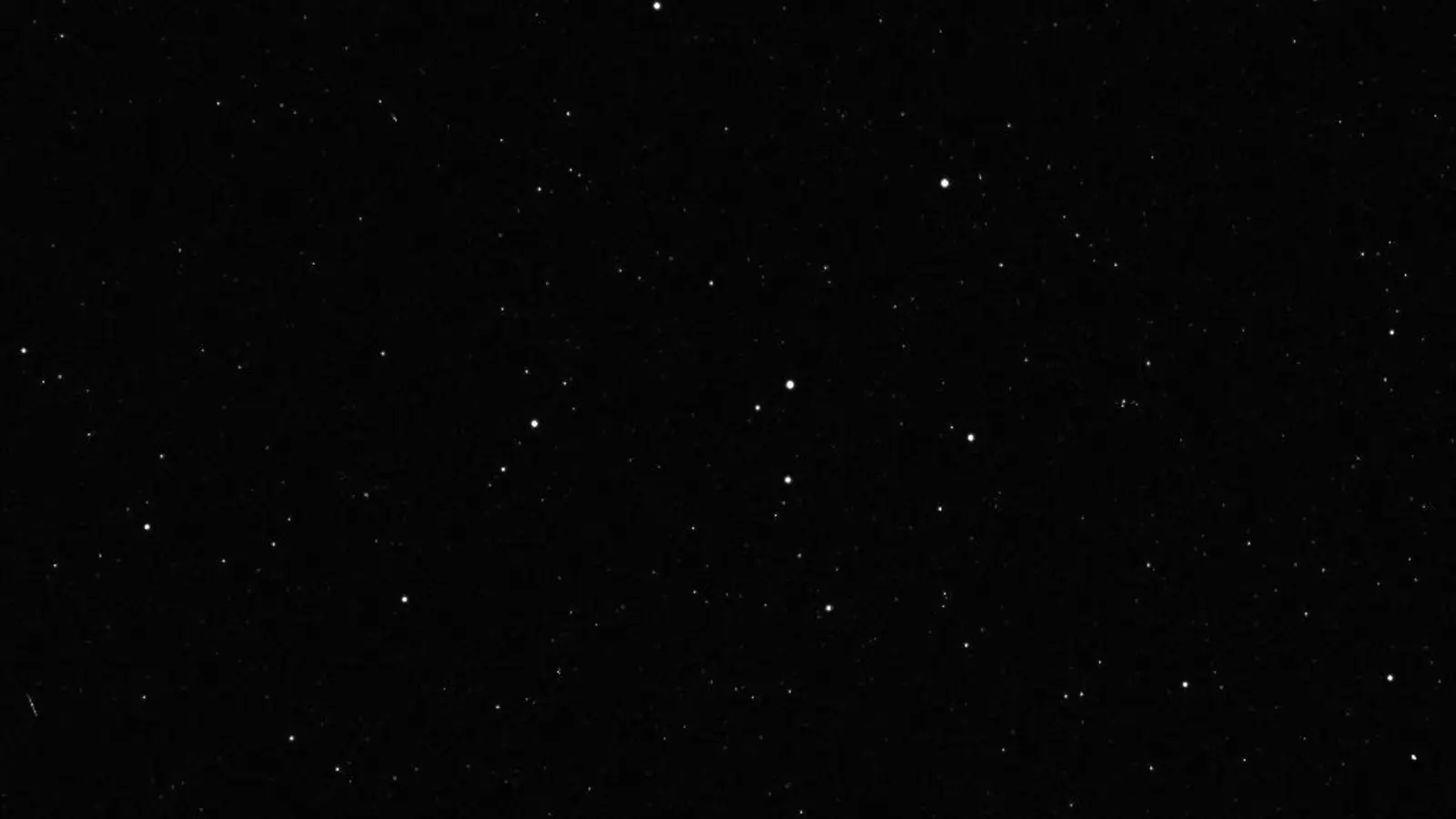
A star can shine steadily while its image flickers. The last part of its light’s journey passes through Earth’s atmosphere, where adjacent regions of air differ in temperature and density. Those differences affect refraction: the bending of light as it travels through a medium whose optical properties vary.
The air is moving, so the distortion is changing. Your eye receives a slightly different pattern of light from moment to moment. A small bright point can appear to tremble, brighten or dim even though the distant object has not undergone a corresponding rapid change. NASA’s StarChild explanation of twinkling identifies this moving atmosphere as the cause of the familiar effect.
There is no requirement for an obvious breeze at ground level. The column of air between an observer and a star extends far above the place where that observer is standing. Conditions along that path matter more than whether a nearby tree is moving.
Scintillation and seeing describe different problems
Scintillation refers to fluctuations in the received intensity of starlight. Astronomical seeing concerns the atmosphere’s effect on image sharpness. They are related consequences of turbulence, but treating them as interchangeable can make the explanation confusing.
Imagine taking successive photographs of a point of light. Its brightness might vary between frames, while its apparent location and shape also vary. Combining the frames can produce a broader image than the optics would deliver through an undisturbed path. That is why an explanation about twinkling also matters to the resolution of a telescope.
NASA’s Ask an Astrophysicist discussion of the night sky connects the moving stellar image to atmospheric seeing. The important distinction is between a change in the incoming light’s distribution and a change in the star itself.
Why planets usually look less flickery
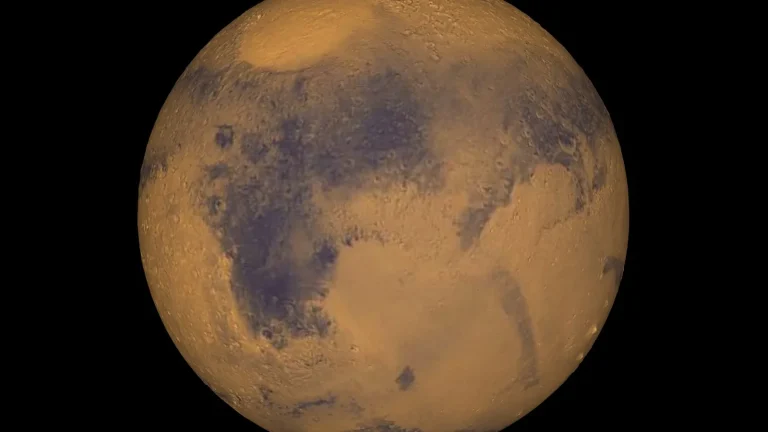
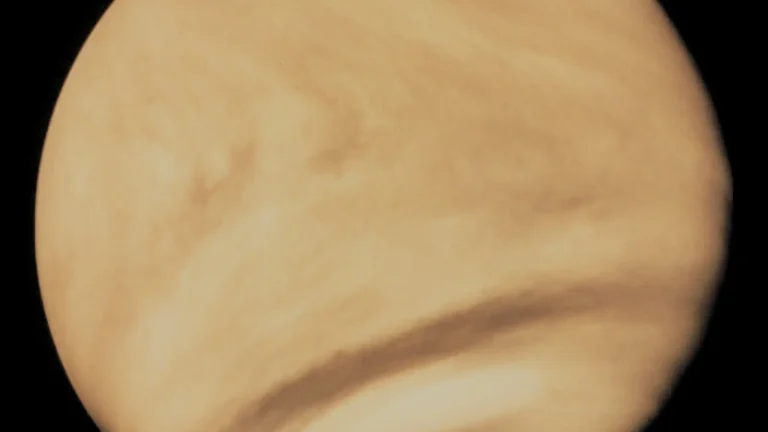
To an unaided eye, a planet and a star can both look like small dots. Their apparent angular sizes are nevertheless different. Most stars are effectively unresolved points for this purpose, whereas a visible planet presents a small disk.
Light from different parts of that disk follows slightly different paths through the atmosphere. Their fluctuations do not all line up perfectly, so the combined light tends to vary less dramatically. This averaging explains why a bright planet can look calm beside a lively-looking star.
It is a useful comparison, not an infallible identification test. Poor viewing conditions can disturb a planet’s appearance too. A single observation of a flashing light cannot establish its identity: movement, position, time and repeated observations provide additional clues.
What a telescope can and cannot solve
A telescope collects more light, but collecting more light does not remove the moving air in front of it. Magnifying an already distorted image can make the disturbance easier to see instead of revealing extra detail.
The European Southern Observatory describes adaptive optics as a way of correcting atmospheric image distortion. The system measures a reference light source and changes the shape of a deformable mirror in response. The correction is made in the optical system; it does not physically calm the atmosphere.
ESO’s interview with an adaptive-optics engineer explains the feedback loop between a reference source, a wavefront sensor, a computer and the deformable mirror. A natural star can provide the reference, while some systems use a laser to create an artificial guide source. These are specialized observatory systems, rather than a setting available on every telescope.
Why observing from space helps
A telescope above the atmosphere avoids the turbulent air responsible for ground-based image distortion. That is one reason to operate an observatory in space, but it is not the only one.
The atmosphere also blocks some wavelengths and contributes its own emission. Those issues are separate from twinkling. A correction for image distortion does not automatically recover light that never reaches a ground-based detector.
NASA discusses the benefits of the orbital viewpoint in Why Have a Telescope in Space? An archived JPL explanation of the WISE mission also distinguishes image disturbance from the challenges of observing infrared light through a warm, absorbing atmosphere.
A simple observation to try
Choose a clear evening and identify a star and a planet using a reliable sky chart. Look at each for several short intervals, writing down whether its brightness appears steady, flickery or difficult to judge. Repeat the comparison on a different evening.
Keep your notes descriptive. “The star appeared to flicker more often than the planet” records an observation. “The star was changing its energy output every fraction of a second” adds an explanation that this observation does not establish.
You do not need to force every result to match an expected pattern. If both objects appear disturbed, record that. If you are uncertain which object is a planet, leave the identification open until you check it. The value of the exercise is recognizing how much an intervening medium can change an image.
Common questions
Is the star repeatedly turning on and off?
The familiar rapid twinkle seen from the ground is an atmospheric effect. It is not evidence that a star repeatedly stops emitting light.
Does every change in a star’s brightness come from the atmosphere?
No. Stars can vary intrinsically, and astronomical observations can reveal other causes of changing brightness. Establishing a cause requires measurements and context beyond noticing a flicker with the unaided eye.
Will a more powerful telescope eliminate the effect?
Greater magnification alone does not correct the atmospheric path. Instrument design, observing conditions and specialized corrections determine the resulting image quality.
Keep exploring
Another atmospheric effect changes the light spread across the daytime sky: read why the sky is blue. For a different origin of light in the upper atmosphere, explore what causes the northern lights.
Sources and further reading
Why location and nearby heat matter
A star close to the horizon is viewed through more atmosphere than a star high overhead. That longer path often makes its twinkling more noticeable. NASA’s StarChild guide explains this difference, which is worth recording when comparing objects during a night-sky observation.
Disturbance can also arise close to a telescope. Warm air from an enclosure or nearby surfaces can blur an image before the rest of the atmosphere is considered. ESO’s description of thermal control at La Silla explains why preventing daytime heat buildup helps protect astronomical seeing. A high site and an excellent mirror do not eliminate the need to control the observing environment.
Keep exploring.
One remarkable idea at a time—nature, science, history and beyond.
Sources and further reading
Barnakle uses credible primary and authoritative sources wherever possible.
- NASA StarChild — Why do stars twinkle?
- https://starchild.gsfc.nasa.gov/docs/StarChild/questions/question26.html
- NASA Ask an Astrophysicist — The Night Sky
- https://imagine.gsfc.nasa.gov/ask_astro/night_sky.html
- ESO — Adaptive Optics
- https://www.eso.org/public/teles-instr/technology/adaptive_optics/
- ESO — Twinkle, twinkle little star, but not on our watch
- https://www.eso.org/public/blog/twinkle-twinkle-little-star/
- NASA Hubble — Why Have a Telescope in Space?
- https://science.nasa.gov/mission/hubble/overview/why-have-a-telescope-in-space/
- NASA/JPL — Hi Ho, Hi Ho, It’s Into Space We Go (2009 archive)
- https://www.jpl.nasa.gov/blog/2009/11/hi-ho-hi-ho-its-into-space-we-go/
- ESO — Keeping cool at La Silla
- https://eso.org/public/images/potw1538a/
Last reviewed October 15, 2026.

Barnakle Editorial Team
A member of the Barnakle editorial team, exploring remarkable ideas with clarity, curiosity and care.
More from this author →