
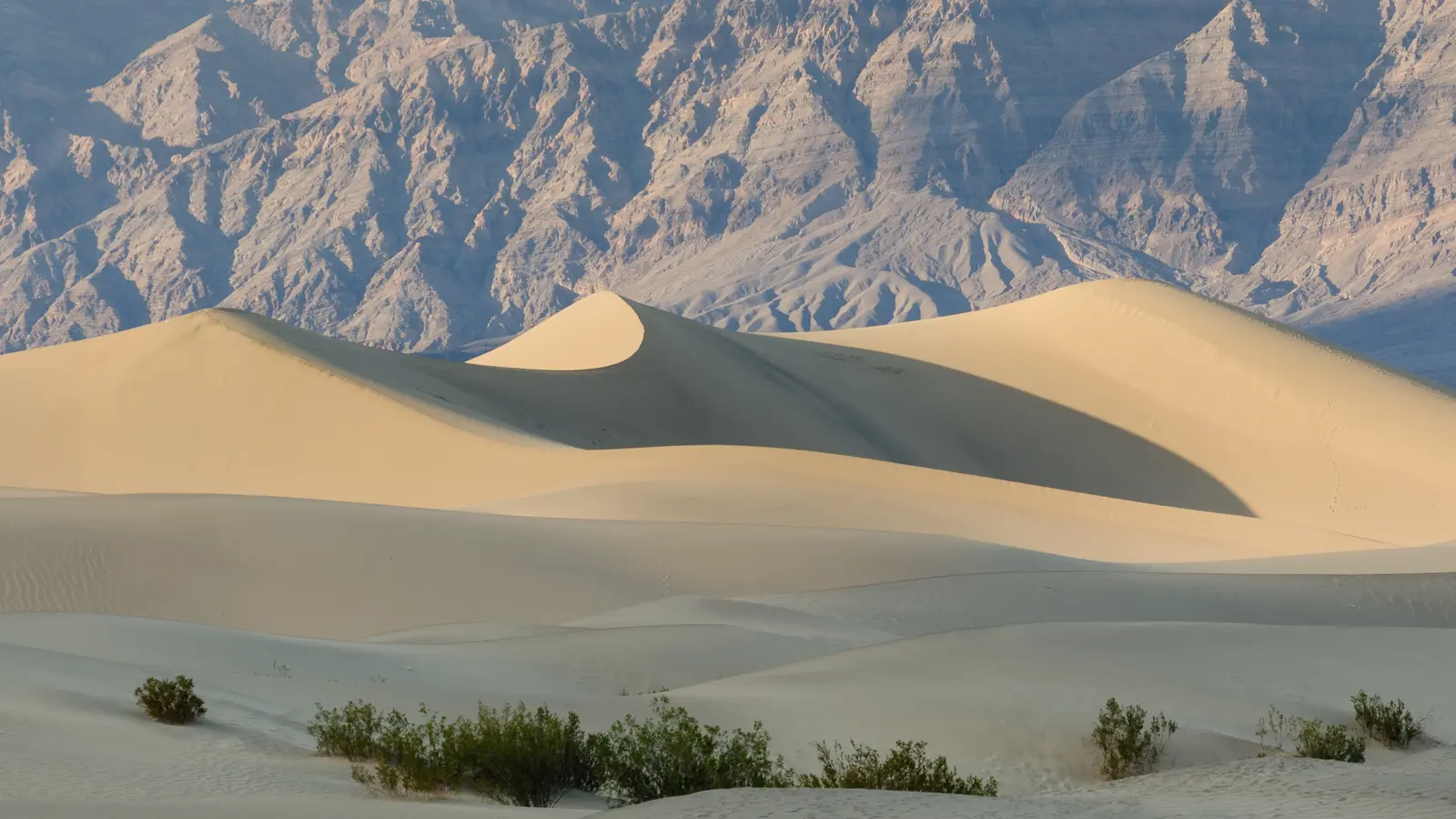
Wind lifts and bounces grains up a gentle slope before avalanches rebuild the steep lee side
The short answer
Sand dunes migrate when wind transports grains up their windward slope and deposits them near the crest. Sand then avalanches down the steeper sheltered side. Repeating that cycle shifts the entire landform downwind even though individual grains move only short distances at a time. Speed and shape depend on wind, sand supply, moisture, vegetation and obstacles.
A dune looks solid from a distance, but its surface is a moving boundary between air and loose sediment. Grains roll, creep and bounce; the dune changes the wind flowing over it; and the resulting pattern feeds back on the dune’s form. Some dunes travel, some grow in place and others reverse direction seasonally.
Saltation carries much of the sand
Wind lifts grains into short hops. Each impact can eject other particles, creating a moving layer close to the surface called saltation.
Understanding Saltation carries much of the sand requires separating the immediate mechanism from the conditions that make it stronger, weaker or easier to observe. Researchers measure those variables independently, compare natural examples and test whether the same explanation predicts new results. This turns a plausible story into an evidence-based account.
The evidence for Saltation carries much of the sand comes from methods that fail in different ways. Direct observation establishes what occurs, instruments quantify timing or structure, experiments isolate candidate causes and models test whether known rules reproduce the pattern. Agreement across methods is more persuasive than repetition of one memorable example.
Context also matters for Saltation carries much of the sand. Scale, species, location, temperature, geometry and measurement limits can change the result without overturning the underlying process. Careful reporting preserves that variation, states uncertainty and prevents a useful explanation from becoming an exaggerated universal rule.
A practical explanation should also answer what would change the observation. Following that question reveals the limits of the evidence and identifies the next measurement needed.
Creep moves larger grains
Particles too heavy to jump can roll or slide when struck by saltating grains. This slower motion contributes to sorting across the dune.
Understanding Creep moves larger grains requires separating the immediate mechanism from the conditions that make it stronger, weaker or easier to observe. Researchers measure those variables independently, compare natural examples and test whether the same explanation predicts new results. This turns a plausible story into an evidence-based account.
The evidence for Creep moves larger grains comes from methods that fail in different ways. Direct observation establishes what occurs, instruments quantify timing or structure, experiments isolate candidate causes and models test whether known rules reproduce the pattern. Agreement across methods is more persuasive than repetition of one memorable example.
Context also matters for Creep moves larger grains. Scale, species, location, temperature, geometry and measurement limits can change the result without overturning the underlying process. Careful reporting preserves that variation, states uncertainty and prevents a useful explanation from becoming an exaggerated universal rule.
A practical explanation should also answer what would change the observation. Following that question reveals the limits of the evidence and identifies the next measurement needed.
The windward slope is gentle
Wind accelerates over the exposed side and carries grains upward. Its angle reflects transport, grain properties and the surrounding flow.
Understanding The windward slope is gentle requires separating the immediate mechanism from the conditions that make it stronger, weaker or easier to observe. Researchers measure those variables independently, compare natural examples and test whether the same explanation predicts new results. This turns a plausible story into an evidence-based account.
The evidence for The windward slope is gentle comes from methods that fail in different ways. Direct observation establishes what occurs, instruments quantify timing or structure, experiments isolate candidate causes and models test whether known rules reproduce the pattern. Agreement across methods is more persuasive than repetition of one memorable example.
Context also matters for The windward slope is gentle. Scale, species, location, temperature, geometry and measurement limits can change the result without overturning the underlying process. Careful reporting preserves that variation, states uncertainty and prevents a useful explanation from becoming an exaggerated universal rule.
A practical explanation should also answer what would change the observation. Following that question reveals the limits of the evidence and identifies the next measurement needed.
A slip face forms downwind
Past the crest, airflow separates and loses carrying power. Deposited sand steepens until small avalanches restore an angle near the material’s repose.
Understanding A slip face forms downwind requires separating the immediate mechanism from the conditions that make it stronger, weaker or easier to observe. Researchers measure those variables independently, compare natural examples and test whether the same explanation predicts new results. This turns a plausible story into an evidence-based account.
The evidence for A slip face forms downwind comes from methods that fail in different ways. Direct observation establishes what occurs, instruments quantify timing or structure, experiments isolate candidate causes and models test whether known rules reproduce the pattern. Agreement across methods is more persuasive than repetition of one memorable example.
Context also matters for A slip face forms downwind. Scale, species, location, temperature, geometry and measurement limits can change the result without overturning the underlying process. Careful reporting preserves that variation, states uncertainty and prevents a useful explanation from becoming an exaggerated universal rule.
A practical explanation should also answer what would change the observation. Following that question reveals the limits of the evidence and identifies the next measurement needed.
Migration is repeated rebuilding
Removal from the upwind side and deposition on the lee side shift the profile. The dune advances without behaving like one rigid block.
Understanding Migration is repeated rebuilding requires separating the immediate mechanism from the conditions that make it stronger, weaker or easier to observe. Researchers measure those variables independently, compare natural examples and test whether the same explanation predicts new results. This turns a plausible story into an evidence-based account.
The evidence for Migration is repeated rebuilding comes from methods that fail in different ways. Direct observation establishes what occurs, instruments quantify timing or structure, experiments isolate candidate causes and models test whether known rules reproduce the pattern. Agreement across methods is more persuasive than repetition of one memorable example.
Context also matters for Migration is repeated rebuilding. Scale, species, location, temperature, geometry and measurement limits can change the result without overturning the underlying process. Careful reporting preserves that variation, states uncertainty and prevents a useful explanation from becoming an exaggerated universal rule.
A practical explanation should also answer what would change the observation. Following that question reveals the limits of the evidence and identifies the next measurement needed.
Small dunes can move faster
With similar sand flux, a smaller dune needs less material transferred to move its profile a given distance. Large dunes therefore often migrate more slowly.
Understanding Small dunes can move faster requires separating the immediate mechanism from the conditions that make it stronger, weaker or easier to observe. Researchers measure those variables independently, compare natural examples and test whether the same explanation predicts new results. This turns a plausible story into an evidence-based account.
The evidence for Small dunes can move faster comes from methods that fail in different ways. Direct observation establishes what occurs, instruments quantify timing or structure, experiments isolate candidate causes and models test whether known rules reproduce the pattern. Agreement across methods is more persuasive than repetition of one memorable example.
Context also matters for Small dunes can move faster. Scale, species, location, temperature, geometry and measurement limits can change the result without overturning the underlying process. Careful reporting preserves that variation, states uncertainty and prevents a useful explanation from becoming an exaggerated universal rule.
A practical explanation should also answer what would change the observation. Following that question reveals the limits of the evidence and identifies the next measurement needed.
Wind direction controls shape
Steady one-way winds favour crescentic barchans where sand is limited. Multiple directions can produce linear, star or reversing dunes.
Understanding Wind direction controls shape requires separating the immediate mechanism from the conditions that make it stronger, weaker or easier to observe. Researchers measure those variables independently, compare natural examples and test whether the same explanation predicts new results. This turns a plausible story into an evidence-based account.
The evidence for Wind direction controls shape comes from methods that fail in different ways. Direct observation establishes what occurs, instruments quantify timing or structure, experiments isolate candidate causes and models test whether known rules reproduce the pattern. Agreement across methods is more persuasive than repetition of one memorable example.
Context also matters for Wind direction controls shape. Scale, species, location, temperature, geometry and measurement limits can change the result without overturning the underlying process. Careful reporting preserves that variation, states uncertainty and prevents a useful explanation from becoming an exaggerated universal rule.
A practical explanation should also answer what would change the observation. Following that question reveals the limits of the evidence and identifies the next measurement needed.
Sand supply sets the landscape
Abundant sand can create connected transverse ridges, while limited supply exposes ground between individual dunes. Sources include beaches, riverbeds and ancient sediments.
Understanding Sand supply sets the landscape requires separating the immediate mechanism from the conditions that make it stronger, weaker or easier to observe. Researchers measure those variables independently, compare natural examples and test whether the same explanation predicts new results. This turns a plausible story into an evidence-based account.
The evidence for Sand supply sets the landscape comes from methods that fail in different ways. Direct observation establishes what occurs, instruments quantify timing or structure, experiments isolate candidate causes and models test whether known rules reproduce the pattern. Agreement across methods is more persuasive than repetition of one memorable example.
Context also matters for Sand supply sets the landscape. Scale, species, location, temperature, geometry and measurement limits can change the result without overturning the underlying process. Careful reporting preserves that variation, states uncertainty and prevents a useful explanation from becoming an exaggerated universal rule.
A practical explanation should also answer what would change the observation. Following that question reveals the limits of the evidence and identifies the next measurement needed.
Vegetation anchors grains
Roots, stems and moisture reduce transport and can transform mobile dunes into stabilized forms. Disturbance or drought may reactivate them.
Understanding Vegetation anchors grains requires separating the immediate mechanism from the conditions that make it stronger, weaker or easier to observe. Researchers measure those variables independently, compare natural examples and test whether the same explanation predicts new results. This turns a plausible story into an evidence-based account.
The evidence for Vegetation anchors grains comes from methods that fail in different ways. Direct observation establishes what occurs, instruments quantify timing or structure, experiments isolate candidate causes and models test whether known rules reproduce the pattern. Agreement across methods is more persuasive than repetition of one memorable example.
Context also matters for Vegetation anchors grains. Scale, species, location, temperature, geometry and measurement limits can change the result without overturning the underlying process. Careful reporting preserves that variation, states uncertainty and prevents a useful explanation from becoming an exaggerated universal rule.
A practical explanation should also answer what would change the observation. Following that question reveals the limits of the evidence and identifies the next measurement needed.
Water changes grain cohesion
Damp sand resists lifting because capillary forces bind grains. Once dry, fine surface material can move quickly under sufficient wind.
Understanding Water changes grain cohesion requires separating the immediate mechanism from the conditions that make it stronger, weaker or easier to observe. Researchers measure those variables independently, compare natural examples and test whether the same explanation predicts new results. This turns a plausible story into an evidence-based account.
The evidence for Water changes grain cohesion comes from methods that fail in different ways. Direct observation establishes what occurs, instruments quantify timing or structure, experiments isolate candidate causes and models test whether known rules reproduce the pattern. Agreement across methods is more persuasive than repetition of one memorable example.
Context also matters for Water changes grain cohesion. Scale, species, location, temperature, geometry and measurement limits can change the result without overturning the underlying process. Careful reporting preserves that variation, states uncertainty and prevents a useful explanation from becoming an exaggerated universal rule.
A practical explanation should also answer what would change the observation. Following that question reveals the limits of the evidence and identifies the next measurement needed.
Dunes can make sound
Avalanching dry, well-sorted grains on some large dunes produce booming or humming vibrations. Grain properties and synchronized motion help sustain the tone.
Understanding Dunes can make sound requires separating the immediate mechanism from the conditions that make it stronger, weaker or easier to observe. Researchers measure those variables independently, compare natural examples and test whether the same explanation predicts new results. This turns a plausible story into an evidence-based account.
The evidence for Dunes can make sound comes from methods that fail in different ways. Direct observation establishes what occurs, instruments quantify timing or structure, experiments isolate candidate causes and models test whether known rules reproduce the pattern. Agreement across methods is more persuasive than repetition of one memorable example.
Context also matters for Dunes can make sound. Scale, species, location, temperature, geometry and measurement limits can change the result without overturning the underlying process. Careful reporting preserves that variation, states uncertainty and prevents a useful explanation from becoming an exaggerated universal rule.
A practical explanation should also answer what would change the observation. Following that question reveals the limits of the evidence and identifies the next measurement needed.
Migration creates hazards and habitats
Moving dunes can bury roads and structures, yet dune systems also protect coasts and support specialized plants and animals. Management must respect both roles.
Understanding Migration creates hazards and habitats requires separating the immediate mechanism from the conditions that make it stronger, weaker or easier to observe. Researchers measure those variables independently, compare natural examples and test whether the same explanation predicts new results. This turns a plausible story into an evidence-based account.
The evidence for Migration creates hazards and habitats comes from methods that fail in different ways. Direct observation establishes what occurs, instruments quantify timing or structure, experiments isolate candidate causes and models test whether known rules reproduce the pattern. Agreement across methods is more persuasive than repetition of one memorable example.
Context also matters for Migration creates hazards and habitats. Scale, species, location, temperature, geometry and measurement limits can change the result without overturning the underlying process. Careful reporting preserves that variation, states uncertainty and prevents a useful explanation from becoming an exaggerated universal rule.
A practical explanation should also answer what would change the observation. Following that question reveals the limits of the evidence and identifies the next measurement needed.
Common misconceptions
Every dune is not a desert hill marching steadily in one direction. Coastal dunes may be anchored by plants, star dunes can grow vertically under multidirectional winds and seasonal reversals can shift sand back and forth. Wind moves grains, not an intact solid mound.
A concise explanation is useful only when it preserves the causal chain. It becomes misleading when it substitutes a familiar label for a mechanism, confuses association with cause or extends evidence beyond the conditions actually studied.
How scientists know
Scientists survey dune crests with GPS, drones and laser scanning, compare satellite images across years and install traps that measure sand flux. Wind tunnels isolate grain motion, while numerical models couple airflow with erosion, deposition and avalanching.
No single measurement carries the conclusion. Observations, experiments, physical theory and repeated records provide independent checks, while disagreement points to an uncontrolled variable or a question that still needs a better test.
Frequently asked questions
How fast can a dune move?
Rates range from nearly stable to many metres per year, depending on size, wind and sediment supply.
Why is one side steeper?
Sand avalanches on the sheltered lee side until it reaches a stable angle.
Can dunes move against the prevailing wind?
Seasonal or multidirectional winds and interactions between dunes can produce complex net motion.
Do plants stop dunes?
Vegetation often slows and anchors sand, but burial, drought or disturbance can weaken that control.
Are all dunes made of quartz?
No. Dunes may contain gypsum, carbonate, volcanic grains or other locally available particles.
Key takeaways
- Wind transports grains mainly through saltation.
- Avalanches rebuild the steep slip face.
- Erosion upwind and deposition downwind cause migration.
- Wind regime, sand supply and vegetation determine dune form.
Continue exploring
Sources and further reading
Keep exploring.
One remarkable idea at a time—nature, science, history and beyond.
Sources and further reading
Barnakle uses credible primary and authoritative sources wherever possible.
- National Park Service — Dune Types
- https://www.nps.gov/grsa/learn/nature/dune-types.htm
- National Park Service — Sand Dunes
- https://www.nps.gov/subjects/nnlandmarks/sand-dunes.htm
- USGS — Coastal Dunes
- https://www.usgs.gov/programs/coastal-and-marine-hazards-and-resources-program/science/coastal-change-hazards
- NASA Earth Observatory — Dunes
- https://earthobservatory.nasa.gov/features/SandDunes
Last reviewed October 6, 2026.

Barnakle Editorial Team
A member of the Barnakle editorial team, exploring remarkable ideas with clarity, curiosity and care.
More from this author →