Ripening enzymes transform the fruit while oxygen-driven pigment chemistry darkens damaged peel and flesh
A yellow banana with freckles and a green banana blackened by cold can both look brown, yet they tell different stories. Ripening, bruising and chilling alter living fruit tissue through different routes. To understand the colour, follow the changes inside the cells rather than using the peel as a single clock counting down to spoilage.
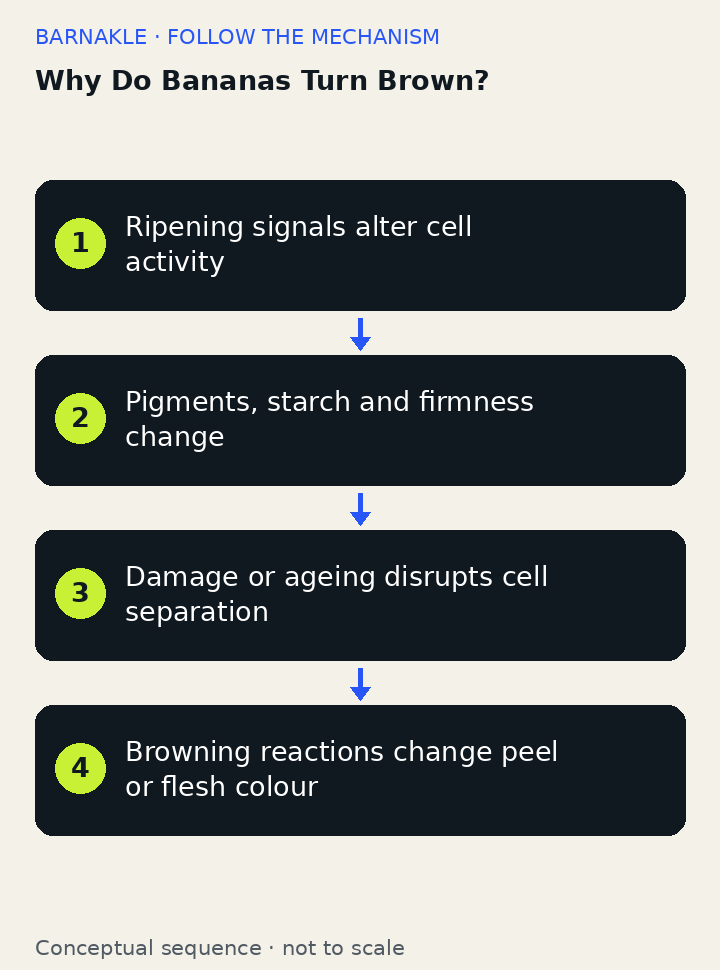
Ripening coordinates several changes at once
Bananas are climacteric fruit: respiration rises during ripening and ethylene acts as a hormone signal. A small exposure can trigger more ethylene production and a coordinated shift in texture, aroma, colour and sweetness.
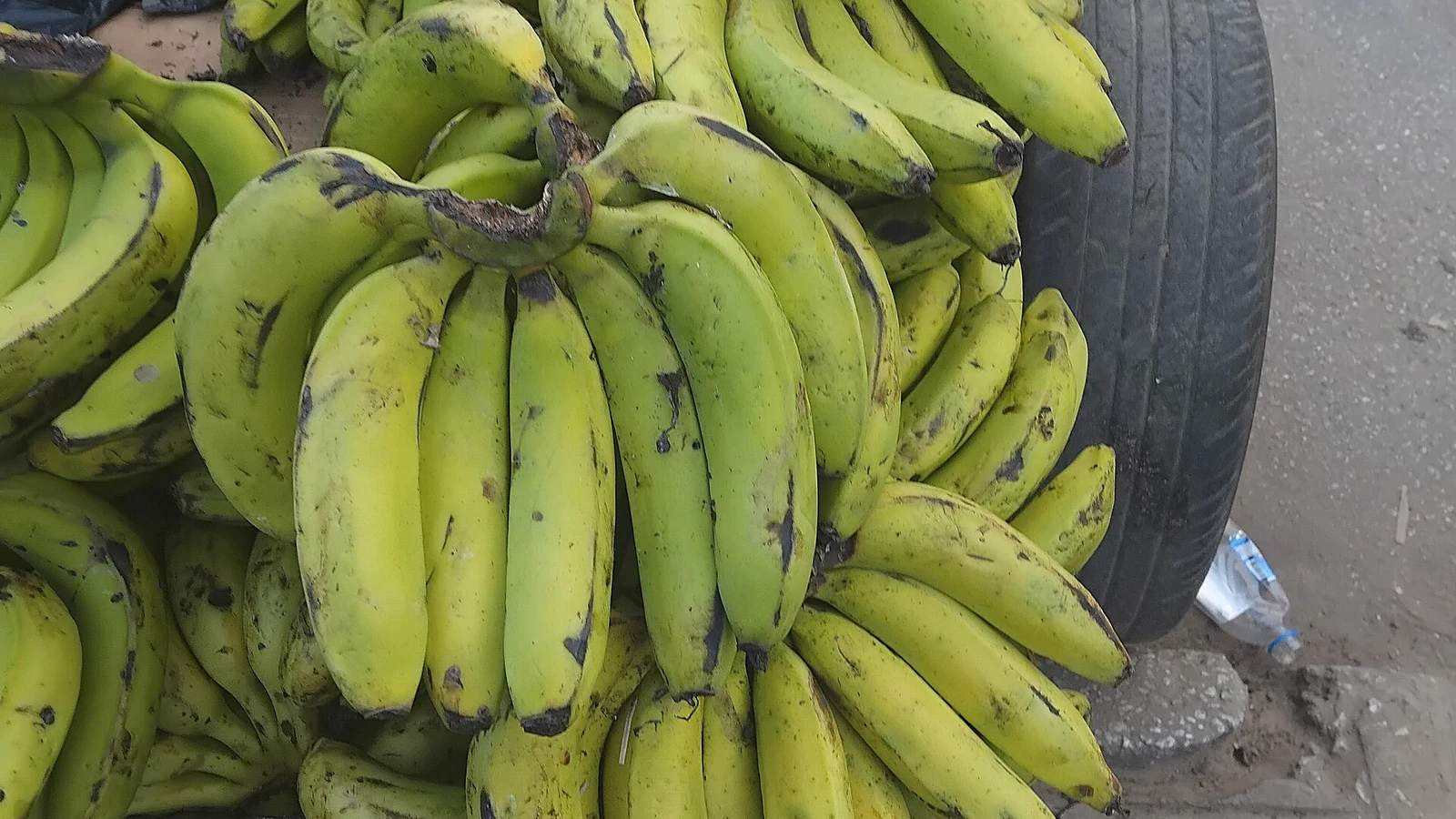
Unripe peel looks green because chlorophyll dominates reflected light. Ripening dismantles that pigment and alters chloroplast structures, allowing yellow carotenoid pigments and other peel colours to become visible.
Enzymes break stored starch into smaller sugars, increasing sweetness. Other enzymes modify acids and volatile compounds, producing the flavour and aroma associated with ripe banana.
Pectin and hemicellulose in cell walls are remodelled, reducing firmness. Softer tissue is easier to bruise, and weakened membranes are less able to keep enzymes and phenolic substrates in separate compartments.
Ethylene is a signal within the fruit's biology. It helps coordinate a programme of changes rather than merely painting the peel yellow. Sugar content, firmness, aroma and colour can all evolve, but not at identical rates under every condition. That is one reason peel appearance alone cannot capture the entire state of the fruit.
Cell separation keeps browning chemistry under control
Polyphenol oxidase uses oxygen to oxidize phenolic compounds into quinones. Those reactive molecules undergo further reactions and polymerization, producing brown or nearly black high-molecular-weight pigments.
Small speckles often appear as ripening advances and peel cells change. Their distribution and timing differ from the irregular dark patch caused by a single bruise.
Intact tissue separates components that can react when cells are disrupted. As damage and ageing alter those boundaries, enzymes and substrates can meet under different conditions. The resulting brown products are not the same pigments that originally made the peel green. Losing chlorophyll and developing brown colour should therefore be described as related changes, not a single reaction.
Sources: [3]
Bruising and cold can change the appearance
An impact compresses and ruptures cells below the peel. The damaged area browns faster because enzymes, substrates and oxygen can interact across barriers that intact tissue maintained.
Temperatures below the banana’s safe storage range disrupt membranes and metabolism. Chilling injury can produce grey-brown or black peel even when the pulp is not equally ripe.
A bruise is local mechanical damage. Chilling is a temperature-related physiological injury whose extent depends on cultivar, maturity, temperature and exposure time. UC Davis describes both, including dark streaks and disrupted ripening under chilling conditions. A darkened refrigerated peel does not by itself reveal exactly what happened to the pulp.
A brown peel is not a complete food assessment
Normal browning is chemical and physiological, but damaged, very soft fruit becomes more vulnerable to mould and decay organisms. Odour, leaking tissue and visible growth matter more than colour alone.
Normal colour change and microbial deterioration are different questions. A darker peel can accompany advanced ripening, but colour alone cannot establish that fruit is safe or unsafe. Mould, leaking or decaying tissue and an abnormal odour call for a different assessment from ordinary freckles on otherwise sound fruit.
Sources: [1]
What a local bruise reveals about browning
A patch appearing where a banana was pressed in a shopping bag points toward local injury. General colour change in an undamaged fruit following its ripening pattern suggests another process. Neither observation is a laboratory diagnosis, but together they show why one word—brown—can describe several different histories.
Ripening, bruising and chilling injury
| Term or component | What it means here |
|---|---|
| Ripening | Coordinates changes in colour, sweetness, firmness and aroma. |
| Bruising | Locally disrupts tissue through mechanical injury. |
| Chilling injury | Changes tissue physiology after unsuitable cold exposure. |
A brown peel is not a complete assessment
Refrigeration does not simply stop ripening forever. It slows many reactions but can rapidly darken the peel through chilling injury, and the pulp may remain usable. Brown spots do not automatically mean rot, while an unblemished peel does not guarantee that stored fruit is sound.
How banana ripening is studied
Plant scientists measure ethylene, respiration, firmness, starch, sugars, pigments and enzyme activity across controlled ripening stages. Microscopy and molecular studies track membrane changes and gene expression, while storage experiments isolate temperature, atmosphere and bruising.
Banana browning questions
Why do bananas ripen faster in a bag?
The bag retains ethylene around the fruit, increasing exposure to the ripening signal.
Does lemon juice slow cut-banana browning?
Acidity and antioxidants can slow enzyme activity and oxidation, though they do not stop ageing.
Are brown bananas sweeter?
During normal ripening, starch-to-sugar conversion increases sweetness, though severely decayed fruit should not be eaten.
Similar colours can have different causes
Banana colour is the visible output of a living tissue changing over time. Ethylene-driven ripening, disrupted cell boundaries and storage conditions all contribute. Keeping those processes distinct explains why a fruit can become sweeter as it ripens, develop a bruise in one place, or darken in cold storage without all three changes meaning the same thing.
Continue exploring
Sources and further reading
Keep exploring.
One remarkable idea at a time—nature, science, history and beyond.
Last updated November 6, 2026.

Barnakle Editorial Team
Barnakle Editorial Team is the collective byline used for Barnakle’s editorial articles. The contributor profile explains the team identity and links to the publication’s editorial policies.
More from the editorial team →