An aquifer is a body of rock or sediment capable of transmitting useful quantities of groundwater. Most are not underground lakes. Water occupies pores between grains, fractures in rock or larger openings formed by dissolution.
To understand an aquifer, two questions matter: how much water the material can hold, and how readily that water can move.
Storage and movement are different properties
Porosity describes the proportion of open space. Permeability concerns how easily fluid moves through the material, which depends on the size and connection of the pathways. A material can contain substantial water while releasing it very slowly.
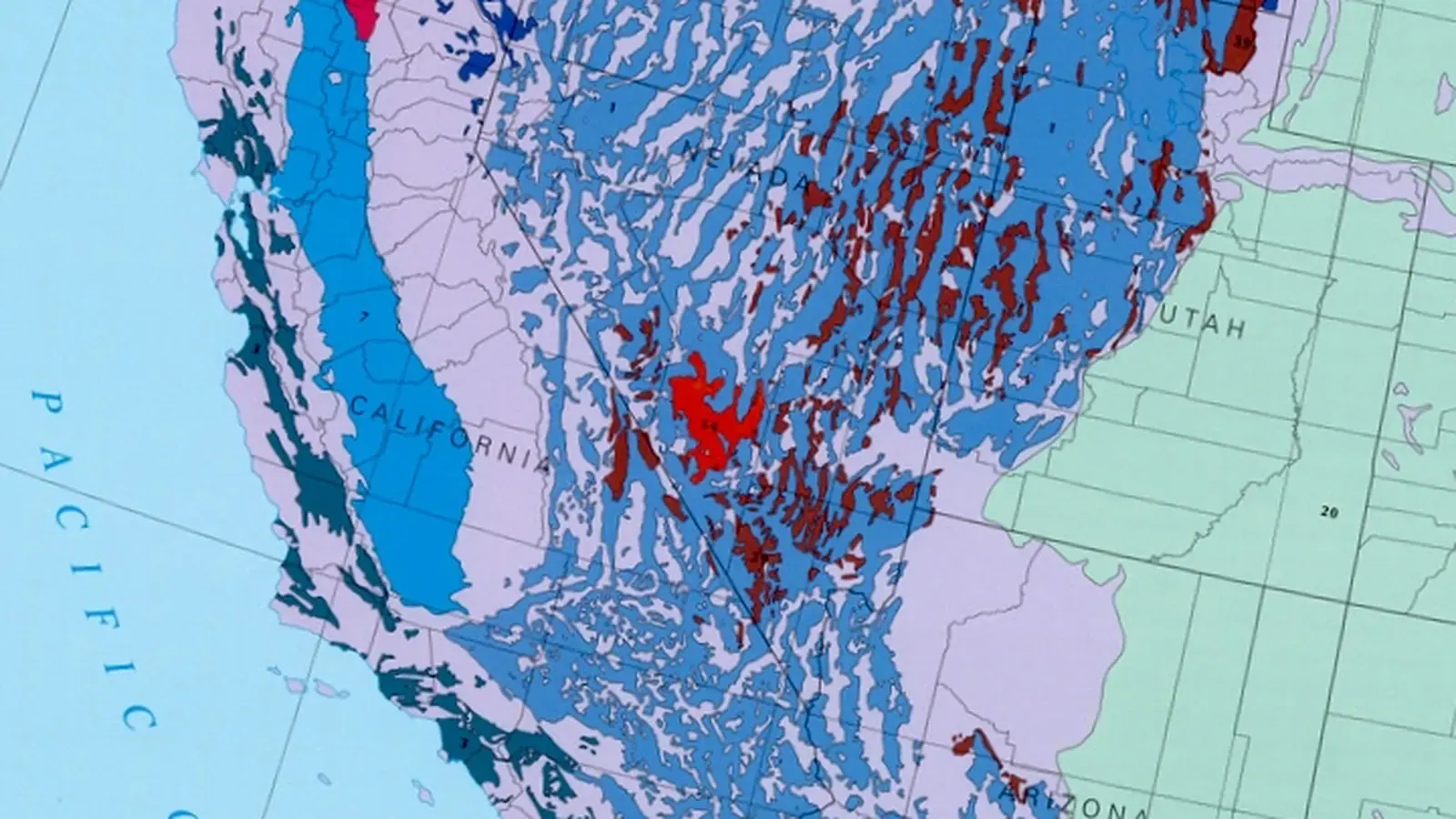
Sand and gravel often provide well-connected spaces. In other rocks, fractures may be more important than the spaces between grains. The Utah Geological Survey uses these differences to explain why not all wet ground is an equally useful water source.
The water table marks a boundary
Below the water table, available openings are saturated. Above it, the unsaturated zone contains both air and water. The boundary can rise or fall as recharge, discharge and storage change.
Rainfall does not instantly become water available to every nearby well. Some water runs off, evaporates or is taken up by plants. Water that infiltrates must then move through the unsaturated zone before reaching the saturated system.
Confined aquifers behave differently
A layer with low permeability can restrict flow above an aquifer. Water within such a confined system may be under pressure, so the level in a penetrating well can rise above the top of the aquifer.
That rise is a pressure response, not evidence of an underground river pushing uphill through an empty tunnel. Whether water reaches the surface without pumping depends on the hydraulic head and the elevation of the well opening.
A pumping well changes the local balance
Removing groundwater can lower water levels or pressure around a well. The response depends on how readily the aquifer transmits water and how storage is released. Nearby streams, springs or wells may be connected to the same system.
An aquifer's total stored volume is therefore not a simple annual allowance. The consequences of pumping depend on rates, locations and connections, including changes in discharge that may emerge over time.
Why groundwater protection is a flow problem
A contaminant can travel along the same connected pathways that supply a well. In fractured or karst systems, some routes may be much faster than an image of uniform seepage through sand would suggest.
Understanding the source of recharge and the direction of flow helps interpret water quality and availability together. The aquifer is a moving part of the water cycle, with storage that can buffer dry periods but cannot be assumed to refill immediately after depletion.
Explore a related question
How Sinkholes Form Beneath Solid Ground
Sources and further reading
Keep exploring.
One remarkable idea at a time—nature, science, history and beyond.
Last updated October 29, 2026.

Barnakle Editorial Team
Barnakle Editorial Team is the collective byline used for Barnakle’s editorial articles. The contributor profile explains the team identity and links to the publication’s editorial policies.
More from the editorial team →