
How Do Seed Banks Keep Seeds Alive?

Follow a seed collection from responsible field sampling to controlled drying, cold storage and viability checks, including the limits of conventional seed banking.
How Do Venus Flytraps Snap Shut?
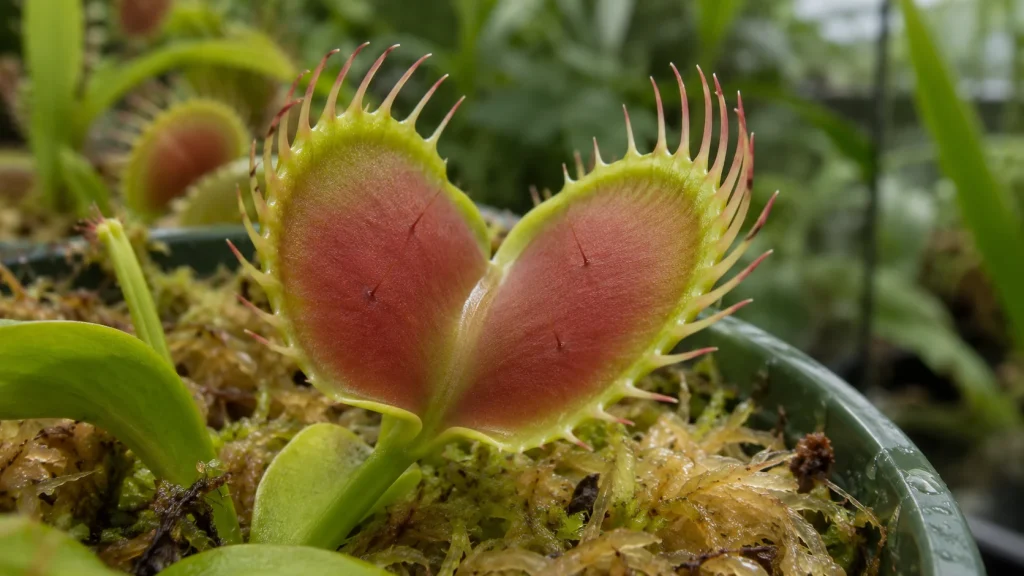
A Venus flytrap snaps shut after its sensory hairs generate enough electrical and calcium signalling to trigger closure. The lobes are mechanically loaded, so a small change can release a rapid snap. A 2026 study identified fast softening of outer cell walls as the mechanical driver, challenging the older explanation that rapid water redistribution powers the closing movement.
Why Do Seashells Sound Like the Ocean?
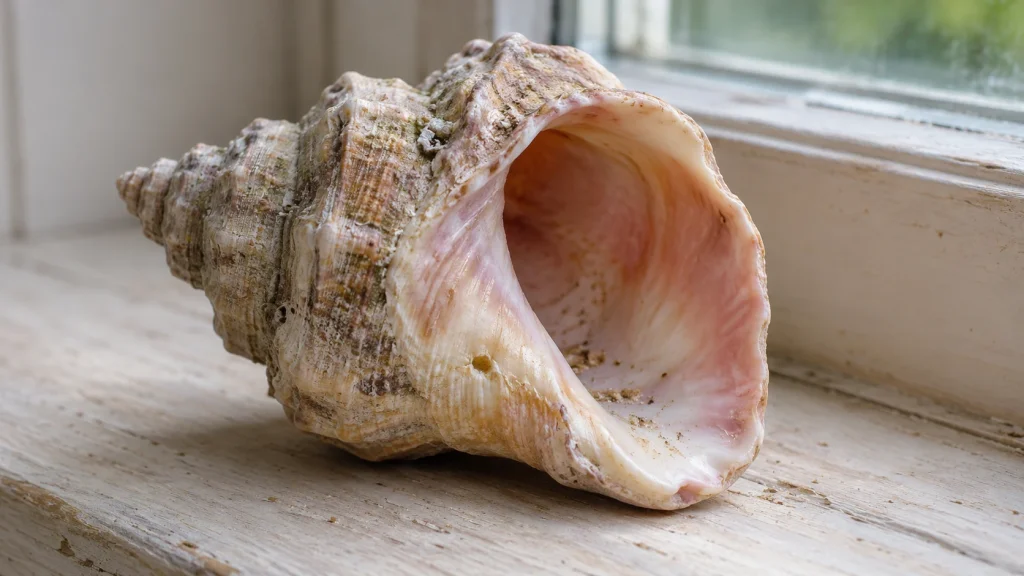
A seashell sounds like the ocean because its cavity changes the background sound reaching your ear. Some frequencies resonate more strongly than others, producing a soft, filtered rushing sound. The shell has not stored a recording of the sea. Its shape, the surrounding noise and the way you hold it all affect what you hear.
Why Do Ice Skates Glide?

Ice skates glide because the blade-ice contact can offer very low resistance to sliding. Mobile surface molecules, interfacial lubrication, frictional heating and deformation can all matter, depending on conditions. The familiar claim that a skater’s weight simply melts a water track is incomplete. Scientists still investigate how the competing mechanisms operate across different contacts and speeds.
How Do Railway Wheels Stay on the Tracks?

Conventional railway wheels stay guided by a combination of shaped treads, their rigid connection across an axle, wheel-rail contact forces and flanges. A small sideways shift changes the effective rolling radius at each wheel, helping the pair follow curves. The flanges provide additional guidance when needed; they are not normally a pair of hooks gripping the rails.
How Do Photocopiers Work?
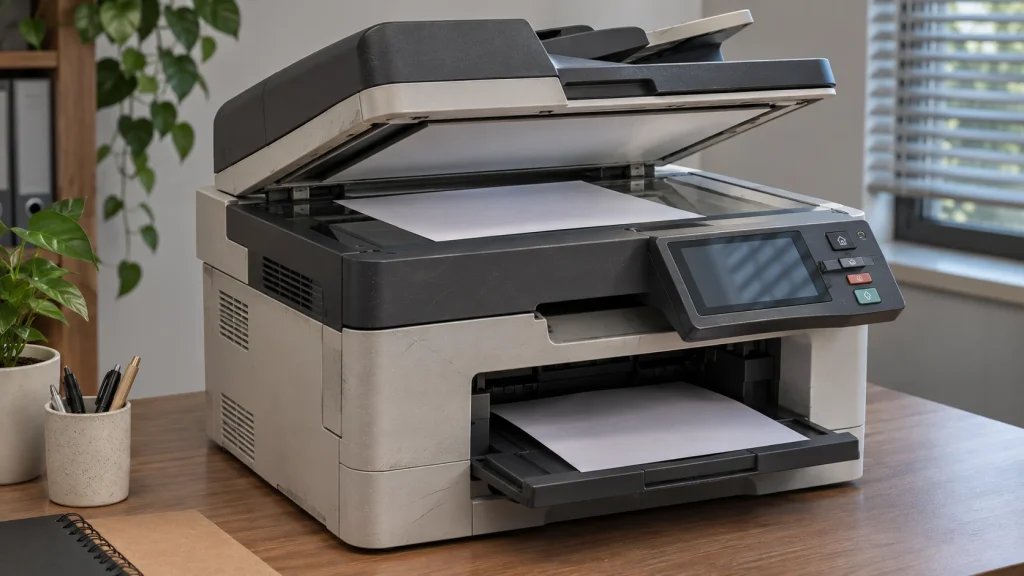
Follow a copied word from digital capture to an invisible charge pattern, visible toner, transfer and heat fixing—and see how copiers differ from scanners.
How Do Electric Guitar Pickups Work?
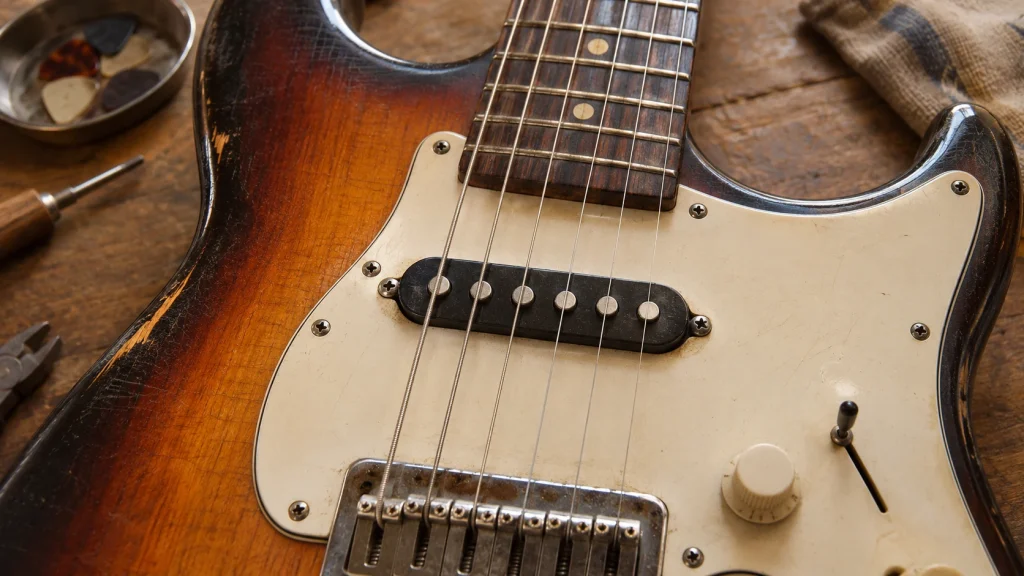
A conventional electric-guitar pickup uses magnets and a coil of fine wire to sense a vibrating ferromagnetic string. The string’s movement changes the magnetic flux linked with the coil, inducing a changing voltage. That small signal travels to an amplifier, which uses its own power supply to drive a loudspeaker.
Why Does Coffee Leave a Ring When It Dries?
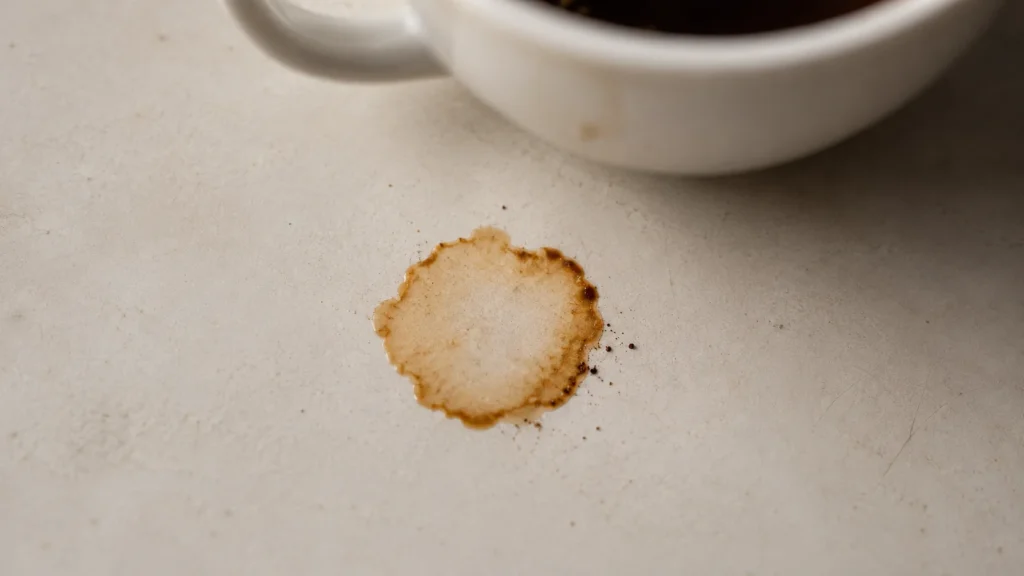
A small coffee spill reveals how evaporation, pinned edges and moving particles create a stain—and why paper, particle shape and surface flows change the result.
Why Does Stainless Steel Resist Rust?

Stainless steel resists rust because it contains enough chromium to form a thin, tightly adherent chromium-rich oxide film at the surface. This passive layer slows the movement of oxygen, water and metal ions that sustain ordinary iron corrosion. If scratched in the presence of oxygen, the film can reform. Stainless does not mean corrosion-proof: chlorides, acids, heat, contamination, crevices and unsuitable alloy grades can locally defeat passivity and cause staining, pitting or cracking.
Why Does Wet Pavement Look Darker?
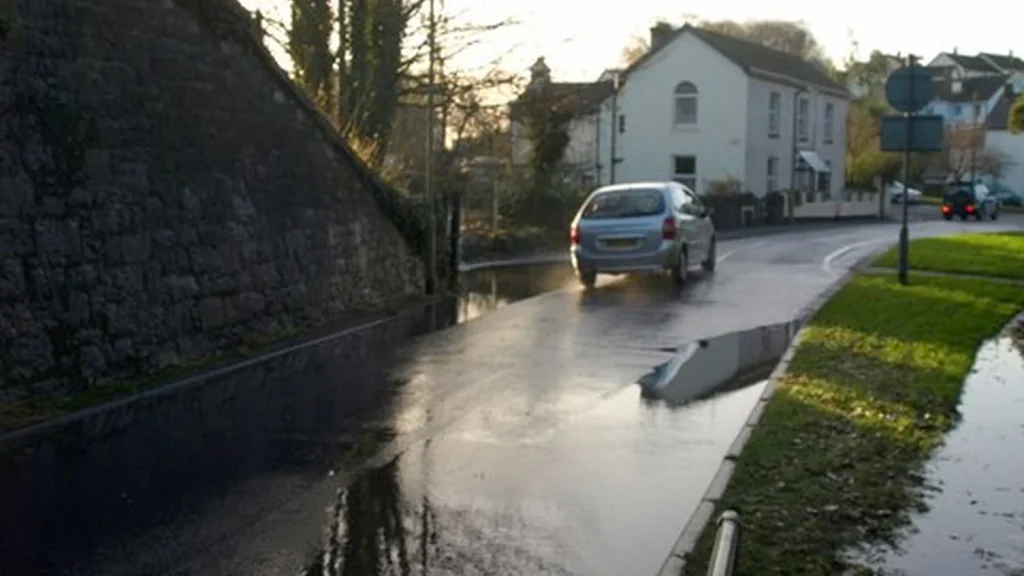
Dry pavement looks relatively bright because microscopic mineral and binder surfaces scatter incident light in many directions, including toward an observer. Water fills air gaps and reduces the refractive-index contrast at those internal boundaries, so less light is scattered straight back out. More light travels deeper, where dark material absorbs it, and some returning light becomes trapped by internal reflection at the water-air surface. The roadway therefore looks darker from many viewing angles while producing bright mirror-like glare in the specular direction.