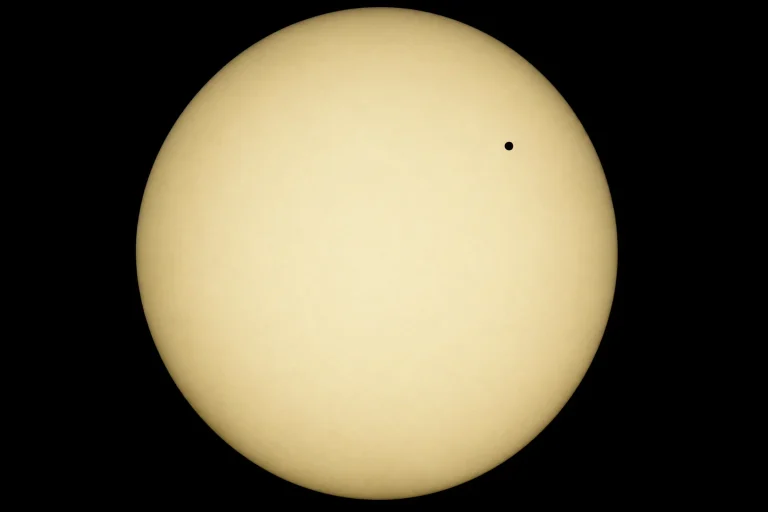
The visible surface of the Sun conceals the nuclear reactions powering it. Neutrinos offer a different route to that interior. Produced in fusion reaction chains, these particles interact so weakly with matter that many escape the Sun without being trapped in repeated interactions.
A detector on Earth can therefore sample information connected to the solar core. The difficulty is that the same weak interaction that lets neutrinos escape also makes them extraordinarily hard to detect.
A rare interaction leaves a measurable trace
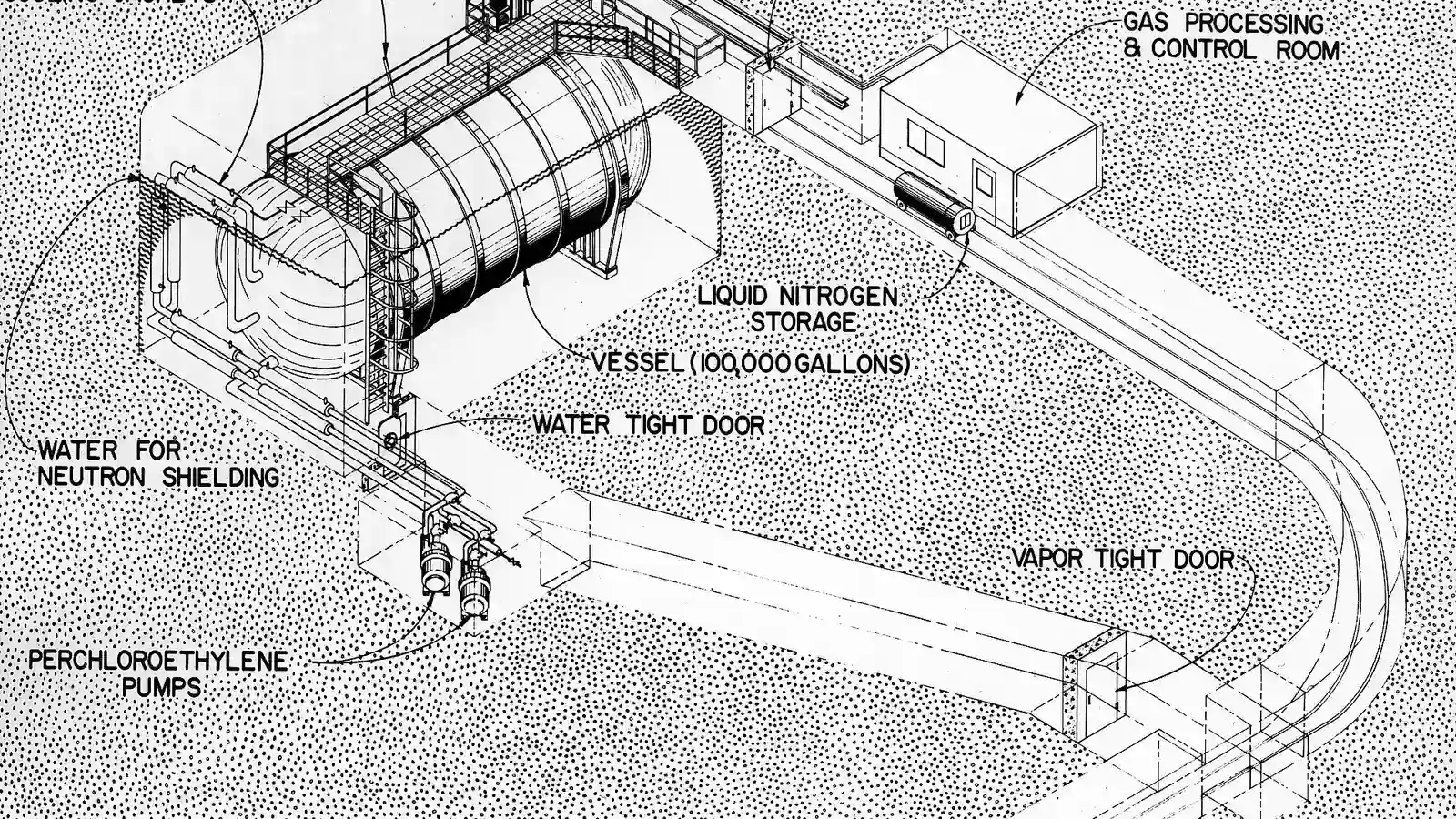
Neutrino experiments use large quantities of carefully selected material. An occasional interaction produces particles or light that instruments can measure. The surrounding rock in an underground laboratory helps reduce backgrounds from cosmic rays, but radioactivity and other sources of noise still require control.
Detection is a statistical measurement. Researchers identify a population of events consistent with neutrinos and estimate competing backgrounds. They do not simply count every flash as a message from the Sun.
The solar neutrino problem changed particle physics
Early experiments detected fewer solar electron neutrinos than solar models predicted. One possibility was that something was wrong with the model of the Sun. Another was that neutrinos changed on their journey.
The Sudbury Neutrino Observatory used heavy water and different interaction channels to compare the electron-neutrino component with the total active-neutrino flux. Its results showed that solar neutrinos arrived in other flavours as well. The deficit in one detectable category did not mean the Sun had stopped producing the expected energy.
These measurements formed part of the evidence recognised by the 2015 Nobel Prize in Physics. Flavour conversion and neutrino mass became central to explaining observations. The detailed role of matter in solar neutrino conversion is important; describing the journey as a simple mechanical switching of particle identities would be misleading.
Different reactions leave different neutrino evidence
Most solar energy comes from the proton–proton chain. A smaller contribution comes from the carbon–nitrogen–oxygen cycle, in which these elements act as catalysts in hydrogen fusion.
The Borexino collaboration reported evidence for neutrinos from the CNO cycle in 2020. The measurement required separating a very small signal from radioactive backgrounds. It provided an additional experimental view of a process central to stellar physics, rather than a photograph of individual reactions in the core.
What the particles can—and cannot—tell us
Measured energies and fluxes test models of fusion, solar structure and neutrino behaviour together. Interpreting one measurement therefore requires information about both the source and the particle's journey.
Solar neutrinos give a direct probe of processes far beneath the visible surface. Their value lies in quantitatively testing those processes, with uncertainty and background analysis built into the result.
Explore a related question
How Starlight Reveals the Elements in Distant Suns
Sources and further reading
Keep exploring.
We’ll email you when the first edition is ready.
Last updated October 29, 2026.

Barnakle Editorial Team
Barnakle Editorial Team is the collective byline used for Barnakle’s editorial articles. The contributor profile explains the team identity and links to the publication’s editorial policies.
More from the editorial team →