
Moving air bends a point of starlight before it reaches your eyes
The short answer
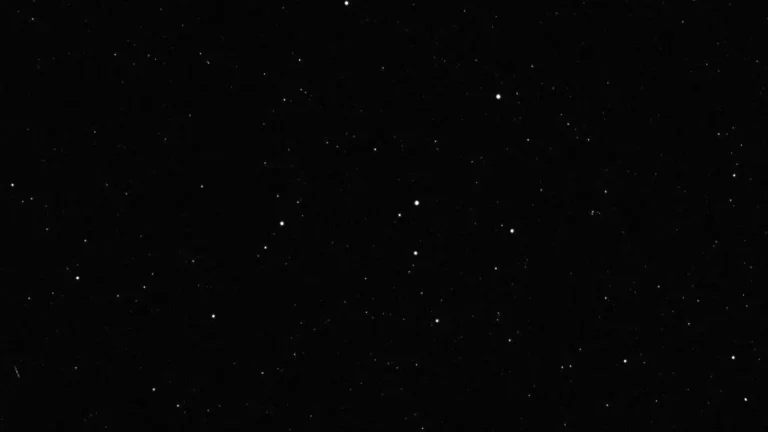
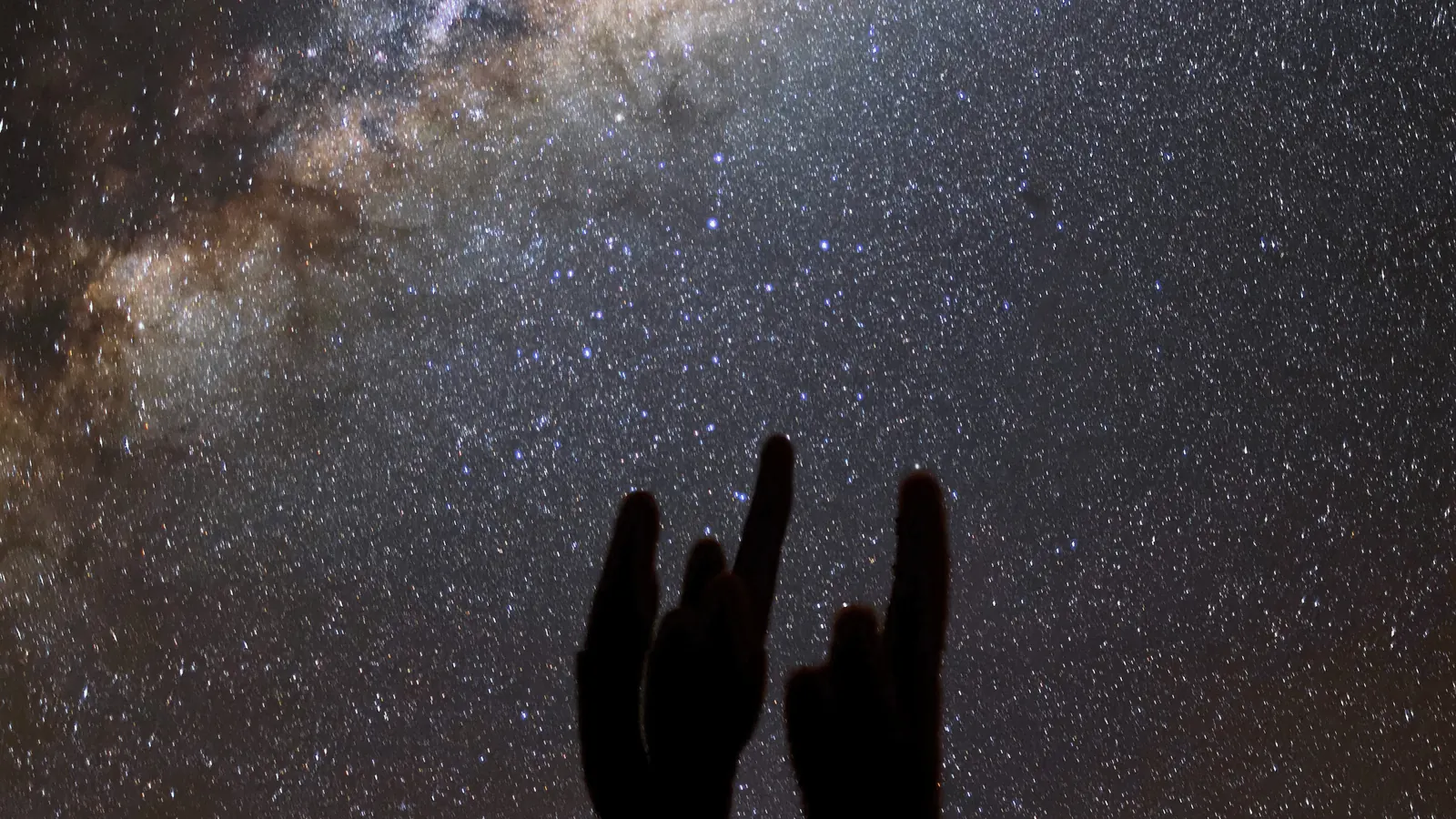
Stars twinkle because their light crosses turbulent layers of Earth’s atmosphere. Pockets of air with different temperatures and densities bend the narrow beam by changing amounts from moment to moment, shifting its apparent position and brightness. Planets usually twinkle less because their visible disks average many slightly different light paths.
The star itself is not rapidly switching on and off. A distant star appears almost point-like, so small atmospheric distortions can noticeably redirect its light. Astronomers call the changing brightness scintillation and the wandering position image motion; both belong to the broader problem of atmospheric seeing.
Stars are effectively points
Even enormous stars are so distant that an unaided observer sees nearly all their light arriving from one unresolved direction. A small refractive disturbance can therefore brighten, dim or displace most of the visible image at once.
Understanding Stars are effectively points requires separating the immediate physical mechanism from the conditions that make it stronger, weaker or easier to observe. Researchers measure those variables independently, compare natural examples and test whether the same explanation predicts a new result. This approach turns a plausible story into an evidence-based account.
The evidence for Stars are effectively points comes from methods that fail in different ways. Direct observation establishes what occurs, instruments quantify timing or structure, experiments isolate candidate causes and models test whether known rules reproduce the pattern. Agreement across those methods is more persuasive than repetition of one dramatic example.
Context also matters for Stars are effectively points. Scale, species, location, temperature, geometry and measurement limits can change the result without overturning the underlying mechanism. Careful reporting preserves that variation, states uncertainty and prevents a useful explanation from becoming an exaggerated universal rule.
Air has a changing refractive index
Warm and cool parcels differ slightly in density. Light changes direction when it crosses boundaries between regions with different refractive indices, and constantly moving air makes those boundaries shift.
Understanding Air has a changing refractive index requires separating the immediate physical mechanism from the conditions that make it stronger, weaker or easier to observe. Researchers measure those variables independently, compare natural examples and test whether the same explanation predicts a new result. This approach turns a plausible story into an evidence-based account.
The evidence for Air has a changing refractive index comes from methods that fail in different ways. Direct observation establishes what occurs, instruments quantify timing or structure, experiments isolate candidate causes and models test whether known rules reproduce the pattern. Agreement across those methods is more persuasive than repetition of one dramatic example.
Context also matters for Air has a changing refractive index. Scale, species, location, temperature, geometry and measurement limits can change the result without overturning the underlying mechanism. Careful reporting preserves that variation, states uncertainty and prevents a useful explanation from becoming an exaggerated universal rule.
Turbulence creates many pathways
Wind, convection and mixing divide the atmosphere into irregular cells. Starlight crosses a changing three-dimensional pattern, so the wavefront reaching a telescope is no longer perfectly flat.
Understanding Turbulence creates many pathways requires separating the immediate physical mechanism from the conditions that make it stronger, weaker or easier to observe. Researchers measure those variables independently, compare natural examples and test whether the same explanation predicts a new result. This approach turns a plausible story into an evidence-based account.
The evidence for Turbulence creates many pathways comes from methods that fail in different ways. Direct observation establishes what occurs, instruments quantify timing or structure, experiments isolate candidate causes and models test whether known rules reproduce the pattern. Agreement across those methods is more persuasive than repetition of one dramatic example.
Context also matters for Turbulence creates many pathways. Scale, species, location, temperature, geometry and measurement limits can change the result without overturning the underlying mechanism. Careful reporting preserves that variation, states uncertainty and prevents a useful explanation from becoming an exaggerated universal rule.
Brightness and position both fluctuate
Atmospheric focusing can concentrate or spread light, producing scintillation, while tilted wavefronts make the image dance. Colour may flash when wavelengths are refracted by slightly different amounts.
Understanding Brightness and position both fluctuate requires separating the immediate physical mechanism from the conditions that make it stronger, weaker or easier to observe. Researchers measure those variables independently, compare natural examples and test whether the same explanation predicts a new result. This approach turns a plausible story into an evidence-based account.
The evidence for Brightness and position both fluctuate comes from methods that fail in different ways. Direct observation establishes what occurs, instruments quantify timing or structure, experiments isolate candidate causes and models test whether known rules reproduce the pattern. Agreement across those methods is more persuasive than repetition of one dramatic example.
Context also matters for Brightness and position both fluctuate. Scale, species, location, temperature, geometry and measurement limits can change the result without overturning the underlying mechanism. Careful reporting preserves that variation, states uncertainty and prevents a useful explanation from becoming an exaggerated universal rule.
Stars near the horizon twinkle more
Low objects are viewed through a longer atmospheric path than overhead objects. Their light crosses more turbulent layers, and refraction separates colours more strongly, making bright stars appear to sparkle.
Understanding Stars near the horizon twinkle more requires separating the immediate physical mechanism from the conditions that make it stronger, weaker or easier to observe. Researchers measure those variables independently, compare natural examples and test whether the same explanation predicts a new result. This approach turns a plausible story into an evidence-based account.
The evidence for Stars near the horizon twinkle more comes from methods that fail in different ways. Direct observation establishes what occurs, instruments quantify timing or structure, experiments isolate candidate causes and models test whether known rules reproduce the pattern. Agreement across those methods is more persuasive than repetition of one dramatic example.
Context also matters for Stars near the horizon twinkle more. Scale, species, location, temperature, geometry and measurement limits can change the result without overturning the underlying mechanism. Careful reporting preserves that variation, states uncertainty and prevents a useful explanation from becoming an exaggerated universal rule.
Planets usually look steadier
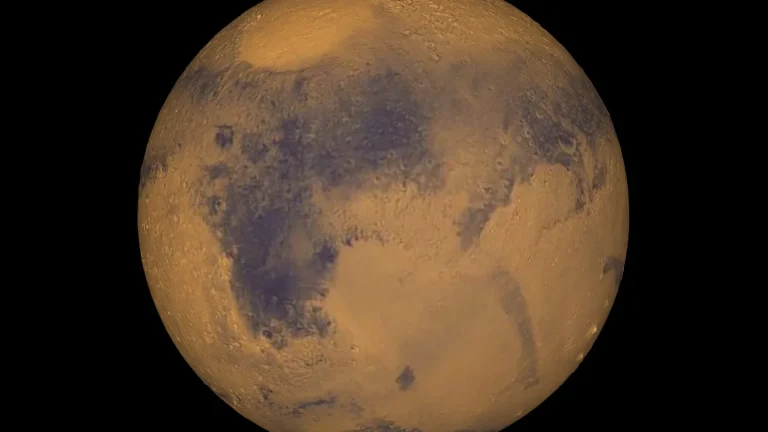
A planet presents a tiny disk rather than a single point. Different parts of that disk pass through different air cells, so rapid brightening in one part tends to average against dimming in another.
Understanding Planets usually look steadier requires separating the immediate physical mechanism from the conditions that make it stronger, weaker or easier to observe. Researchers measure those variables independently, compare natural examples and test whether the same explanation predicts a new result. This approach turns a plausible story into an evidence-based account.
The evidence for Planets usually look steadier comes from methods that fail in different ways. Direct observation establishes what occurs, instruments quantify timing or structure, experiments isolate candidate causes and models test whether known rules reproduce the pattern. Agreement across those methods is more persuasive than repetition of one dramatic example.
Context also matters for Planets usually look steadier. Scale, species, location, temperature, geometry and measurement limits can change the result without overturning the underlying mechanism. Careful reporting preserves that variation, states uncertainty and prevents a useful explanation from becoming an exaggerated universal rule.
The vacuum of space removes the effect
An observer above the atmosphere does not see ordinary atmospheric twinkling. Space telescopes avoid this distortion, although stars can still vary intrinsically on very different timescales.
Understanding The vacuum of space removes the effect requires separating the immediate physical mechanism from the conditions that make it stronger, weaker or easier to observe. Researchers measure those variables independently, compare natural examples and test whether the same explanation predicts a new result. This approach turns a plausible story into an evidence-based account.
The evidence for The vacuum of space removes the effect comes from methods that fail in different ways. Direct observation establishes what occurs, instruments quantify timing or structure, experiments isolate candidate causes and models test whether known rules reproduce the pattern. Agreement across those methods is more persuasive than repetition of one dramatic example.
Context also matters for The vacuum of space removes the effect. Scale, species, location, temperature, geometry and measurement limits can change the result without overturning the underlying mechanism. Careful reporting preserves that variation, states uncertainty and prevents a useful explanation from becoming an exaggerated universal rule.
Astronomical seeing limits detail
Turbulence spreads a point source into a moving blur larger than a large telescope’s ideal diffraction pattern. Excellent optics cannot recover detail that the atmosphere has mixed without corrective techniques.
Understanding Astronomical seeing limits detail requires separating the immediate physical mechanism from the conditions that make it stronger, weaker or easier to observe. Researchers measure those variables independently, compare natural examples and test whether the same explanation predicts a new result. This approach turns a plausible story into an evidence-based account.
The evidence for Astronomical seeing limits detail comes from methods that fail in different ways. Direct observation establishes what occurs, instruments quantify timing or structure, experiments isolate candidate causes and models test whether known rules reproduce the pattern. Agreement across those methods is more persuasive than repetition of one dramatic example.
Context also matters for Astronomical seeing limits detail. Scale, species, location, temperature, geometry and measurement limits can change the result without overturning the underlying mechanism. Careful reporting preserves that variation, states uncertainty and prevents a useful explanation from becoming an exaggerated universal rule.
Adaptive optics fights the distortion
Observatories measure wavefront errors using a bright star or an artificial laser guide star. Deformable mirrors change shape hundreds or thousands of times per second to counter the measured distortion.
Understanding Adaptive optics fights the distortion requires separating the immediate physical mechanism from the conditions that make it stronger, weaker or easier to observe. Researchers measure those variables independently, compare natural examples and test whether the same explanation predicts a new result. This approach turns a plausible story into an evidence-based account.
The evidence for Adaptive optics fights the distortion comes from methods that fail in different ways. Direct observation establishes what occurs, instruments quantify timing or structure, experiments isolate candidate causes and models test whether known rules reproduce the pattern. Agreement across those methods is more persuasive than repetition of one dramatic example.
Context also matters for Adaptive optics fights the distortion. Scale, species, location, temperature, geometry and measurement limits can change the result without overturning the underlying mechanism. Careful reporting preserves that variation, states uncertainty and prevents a useful explanation from becoming an exaggerated universal rule.
High dry sites offer better seeing
Mountain observatories rise above dense lower air, clouds and some heat sources. Site surveys track turbulence, humidity and wind because altitude alone does not guarantee a stable atmosphere.
Understanding High dry sites offer better seeing requires separating the immediate physical mechanism from the conditions that make it stronger, weaker or easier to observe. Researchers measure those variables independently, compare natural examples and test whether the same explanation predicts a new result. This approach turns a plausible story into an evidence-based account.
The evidence for High dry sites offer better seeing comes from methods that fail in different ways. Direct observation establishes what occurs, instruments quantify timing or structure, experiments isolate candidate causes and models test whether known rules reproduce the pattern. Agreement across those methods is more persuasive than repetition of one dramatic example.
Context also matters for High dry sites offer better seeing. Scale, species, location, temperature, geometry and measurement limits can change the result without overturning the underlying mechanism. Careful reporting preserves that variation, states uncertainty and prevents a useful explanation from becoming an exaggerated universal rule.
Telescopes must control local heat
Warm domes, roofs and mirrors create their own rising air currents. Ventilation and temperature control reduce local turbulence so the observatory does not manufacture the blur it is trying to avoid.
Understanding Telescopes must control local heat requires separating the immediate physical mechanism from the conditions that make it stronger, weaker or easier to observe. Researchers measure those variables independently, compare natural examples and test whether the same explanation predicts a new result. This approach turns a plausible story into an evidence-based account.
The evidence for Telescopes must control local heat comes from methods that fail in different ways. Direct observation establishes what occurs, instruments quantify timing or structure, experiments isolate candidate causes and models test whether known rules reproduce the pattern. Agreement across those methods is more persuasive than repetition of one dramatic example.
Context also matters for Telescopes must control local heat. Scale, species, location, temperature, geometry and measurement limits can change the result without overturning the underlying mechanism. Careful reporting preserves that variation, states uncertainty and prevents a useful explanation from becoming an exaggerated universal rule.
Real stellar variability is different
Pulsating, eclipsing and eruptive stars genuinely change their output. Astronomers distinguish those repeatable or wavelength-dependent patterns from rapid atmospheric scintillation by comparing instruments and nearby stars.
Understanding Real stellar variability is different requires separating the immediate physical mechanism from the conditions that make it stronger, weaker or easier to observe. Researchers measure those variables independently, compare natural examples and test whether the same explanation predicts a new result. This approach turns a plausible story into an evidence-based account.
The evidence for Real stellar variability is different comes from methods that fail in different ways. Direct observation establishes what occurs, instruments quantify timing or structure, experiments isolate candidate causes and models test whether known rules reproduce the pattern. Agreement across those methods is more persuasive than repetition of one dramatic example.
Context also matters for Real stellar variability is different. Scale, species, location, temperature, geometry and measurement limits can change the result without overturning the underlying mechanism. Careful reporting preserves that variation, states uncertainty and prevents a useful explanation from becoming an exaggerated universal rule.
Common misconceptions
Twinkling is not proof that a star is flickering, dying or emitting light unevenly every second. It is mainly an atmospheric optical effect. Planets can twinkle in very poor seeing or near the horizon, so “planets never twinkle” is a useful tendency rather than an absolute rule.
A concise explanation is valuable only when it preserves the causal chain. It becomes misleading when it substitutes a memorable label for a mechanism, confuses association with cause or extends evidence beyond the conditions actually studied.
How scientists know
Astronomers record high-speed images, wavefront distortions and brightness variations while meteorological instruments profile temperature and wind. They compare ground observations with space telescopes, measure site seeing and test adaptive-optics corrections against known point sources.
No single measurement carries the conclusion. Observations, experiments, physical theory and repeated records provide independent checks, while disagreement points to an uncontrolled variable or a question that still needs a better test.
Frequently asked questions
Why does Sirius twinkle so much?
Sirius is exceptionally bright and often viewed relatively low from northern locations, making atmospheric colour and brightness changes conspicuous.
Do stars twinkle on the Moon?
Without a substantial atmosphere, the Moon does not produce ordinary atmospheric scintillation.
Why do stars flash red and blue?
Atmospheric refraction differs with wavelength, especially through a long low-altitude path.
Can weather change twinkling?
Yes. Turbulence, wind shear and temperature gradients change seeing even under a cloudless sky.
Does twinkling help astronomers?
It is usually a nuisance, but its statistics reveal atmospheric turbulence and guide corrective optics.
Key takeaways
- Atmospheric turbulence bends point-like starlight.
- Low stars usually twinkle more because their light crosses more air.
- Planetary disks average out much of the distortion.
- Adaptive optics measures and corrects changing wavefronts.
Continue exploring
Sources and further reading
Keep exploring.
One remarkable idea at a time—nature, science, history and beyond.
Sources and further reading
Barnakle uses credible primary and authoritative sources wherever possible.
- NASA — Why Stars Twinkle
- https://science.nasa.gov/image-article/apod-2000-july-25-why-stars-twinkle/
- NASA — Why Have a Telescope in Space?
- https://science.nasa.gov/mission/hubble/overview/why-have-a-telescope-in-space/
- NASA — Firing Lasers to Tame the Sky
- https://science.nasa.gov/image-article/apod-2021-february-10-firing-lasers-to-tame-the-sky/
- NASA StarChild — Why do stars twinkle?
- https://starchild.gsfc.nasa.gov/docs/StarChild/questions/question26.html
Last reviewed October 3, 2026.

Barnakle Editorial Team
A member of the Barnakle editorial team, exploring remarkable ideas with clarity, curiosity and care.
More from this author →