
How Do Polarized Sunglasses Reduce Glare?

Polarized sunglasses reduce glare by transmitting light that oscillates mainly in one orientation while absorbing the perpendicular component. Reflection from horizontal non-metallic surfaces such as water or a road tends to concentrate electric-field oscillations in a horizontal direction. Most sunglasses orient their polarizing transmission axis vertically, so they block much of that horizontally polarized reflection while allowing other useful light through. Tint and ultraviolet protection are separate properties.
Why Does Chocolate Turn White?
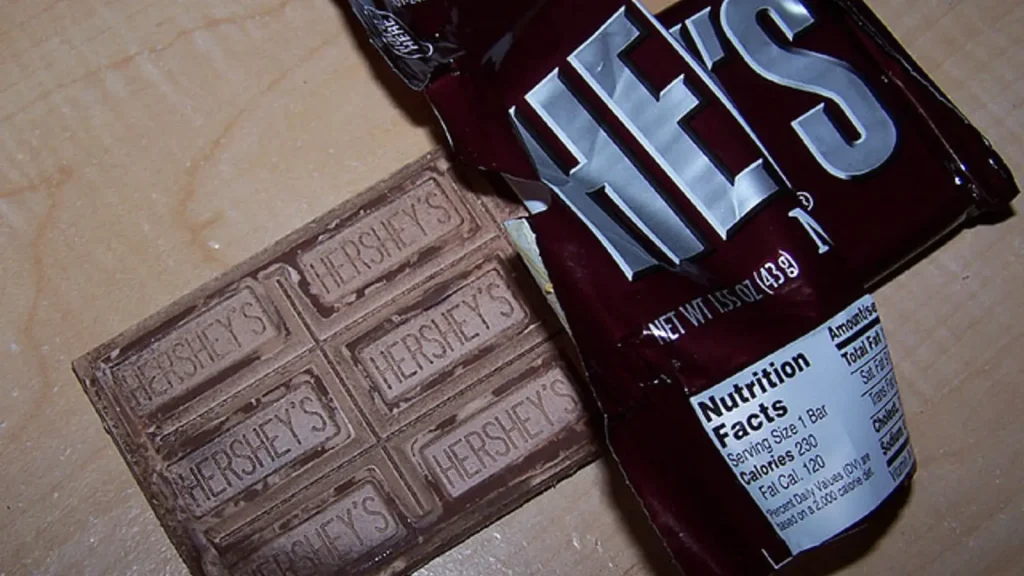
Chocolate develops a white or grey coating through fat bloom or sugar bloom. Fat bloom occurs when cocoa butter crystals rearrange or fat migrates to the surface, often after warm storage or poor tempering. Sugar bloom occurs when condensation dissolves surface sugar; as the water evaporates, the sugar recrystallizes into a rough pale layer. Bloom usually affects texture and appearance more than safety, although spoilage must be assessed separately.
How Do Automatic Doors Detect People?

Automatic doors commonly use microwave radar to detect motion approaching the entrance, active infrared sensors to measure reflections in a monitored zone, or both. A controller interprets those signals, commands an electric operator and watches separate presence and safety sensors so the panels do not close on someone. The system detects changes in reflected energy rather than recognizing a person in the human sense.
Why Does Toothpaste Foam?
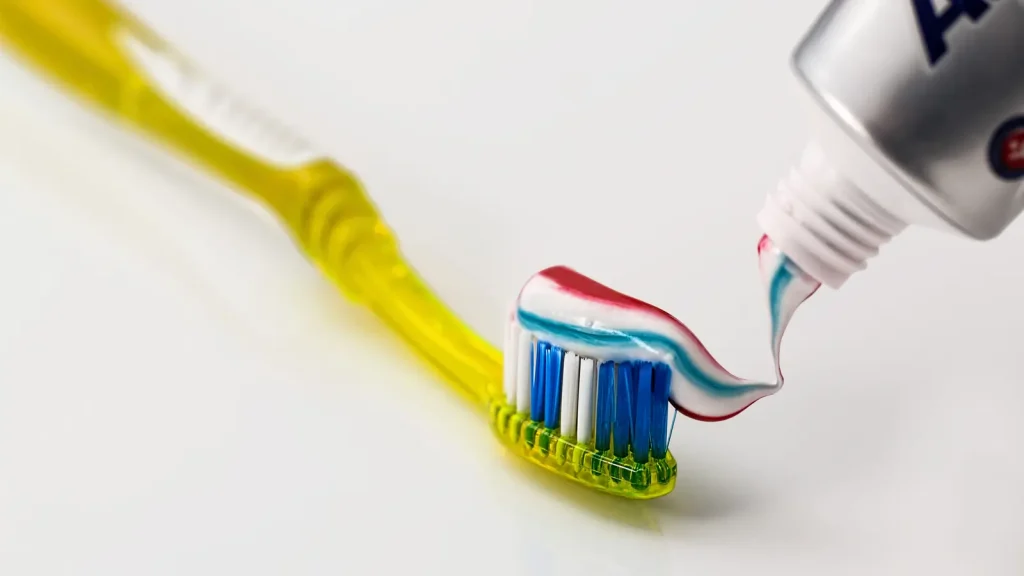
Toothpaste foams because many formulas contain surfactants such as sodium lauryl sulfate. Their molecules have a water-attracting end and an oil-attracting end. During brushing they lower surface tension, help wet tooth surfaces and stabilize thin liquid films around air introduced by the brush. Agitation divides that air into bubbles, creating foam. Foam improves spreading and sensory perception, but the amount of foam does not directly measure cleaning effectiveness.
How Do Mechanical Pencils Work?
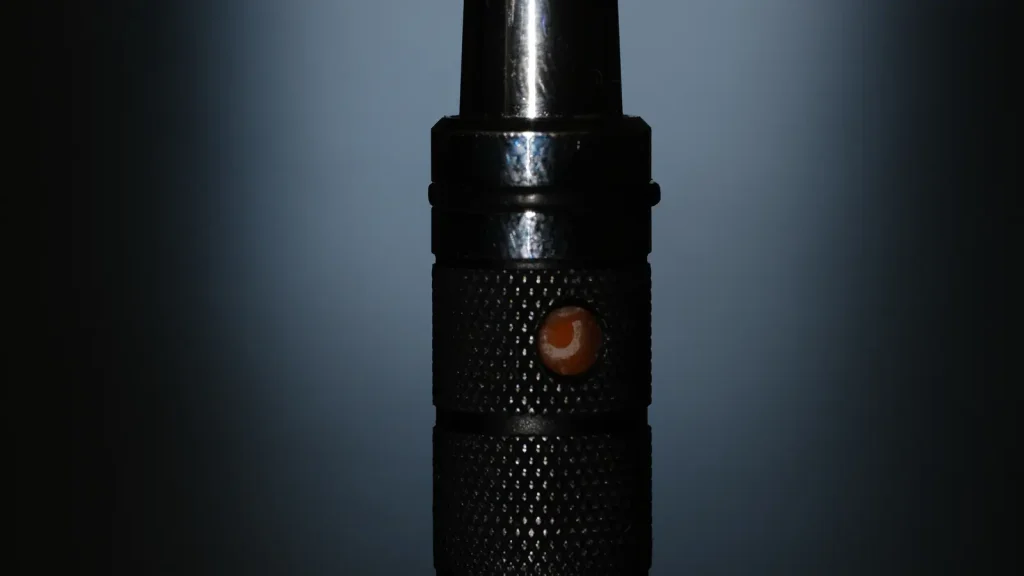
Most click mechanical pencils use a spring-loaded three-jaw clutch. Pressing the button pushes the clutch forward and opens its jaws, allowing the graphite core to slide. Releasing the button lets the spring retract the clutch and close around the lead. A small retaining ring near the tip prevents the lead from falling freely, so each click advances only a short controlled length. Other designs use twist, screw or automatic-feed mechanisms.
Why Does Glass Fog Up?
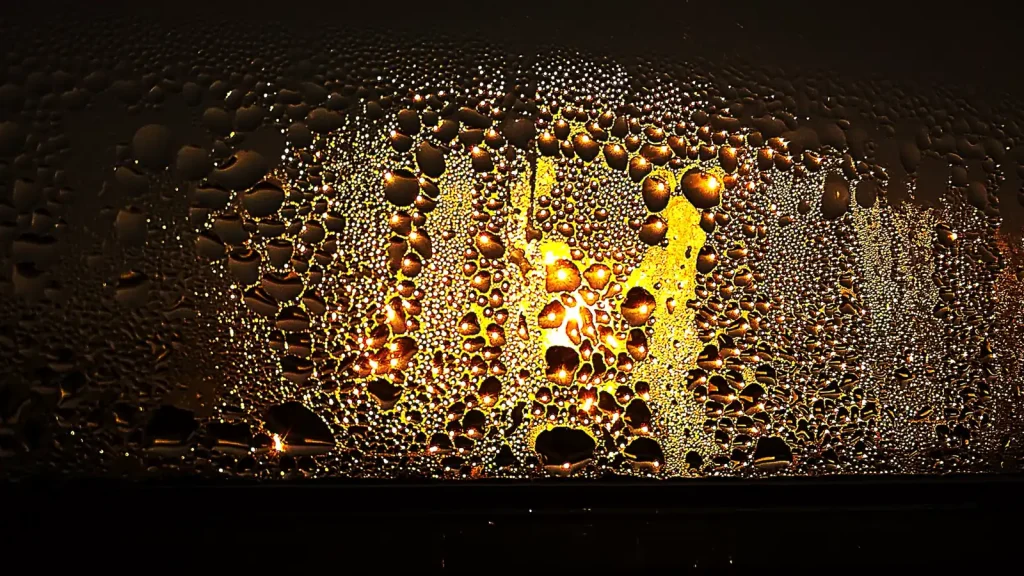
Glass fogs when moist air next to it cools to or below its dew point. Water vapour then condenses into countless microscopic liquid droplets on the surface. Those droplets scatter light, replacing clear transmission with a cloudy appearance. Whether fog forms on the inside or outside depends on which side supplies warm humid air and which side of the glass is cold.
Why Does Helium Change Your Voice?
Helium makes a voice sound unusually bright because sound travels much faster through helium than through air. That shifts the resonant frequencies of the mouth and throat—the formants that shape speech—upward. The vocal folds do not suddenly become tiny or necessarily vibrate much faster, so the fundamental pitch changes far less than the spectral shape listeners interpret as a high voice. Inhaling helium is unsafe because it displaces oxygen.
How Do Induction Cooktops Work?
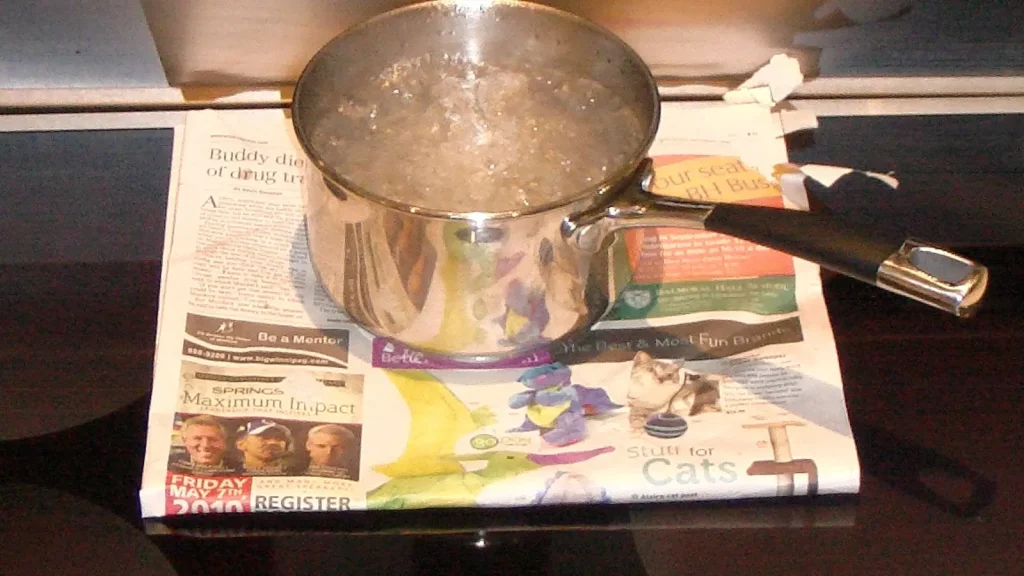
An induction cooktop sends alternating electric current through a coil beneath its glass surface. The coil creates a rapidly changing magnetic field, which induces circulating electrical currents in compatible cookware. Resistance within the metal converts that electrical energy into heat. The pan heats directly, while the glass warms mainly from contact with the hot pan.
Why Does Metal Feel Colder Than Wood?

Metal feels colder than wood because it has much higher thermal conductivity and thermal effusivity. When your warm hand touches an object at room temperature, heat flows into it. Metal draws that heat from the contact area quickly, lowering skin temperature and producing a strong cold sensation. Wood transfers heat slowly, so the skin–wood boundary warms rapidly and feels less cold even when a thermometer shows both objects at the same temperature.
How Do Submarines Rise and Sink?

Submarines dive by opening vents so seawater floods main ballast tanks, increasing the vessel’s average density and reducing buoyancy. They surface by forcing that water out with compressed air, restoring positive buoyancy. For controlled underwater operation, smaller variable ballast and trim systems bring the submarine close to neutral buoyancy, while diving planes generate hydrodynamic forces as the vessel moves forward.